
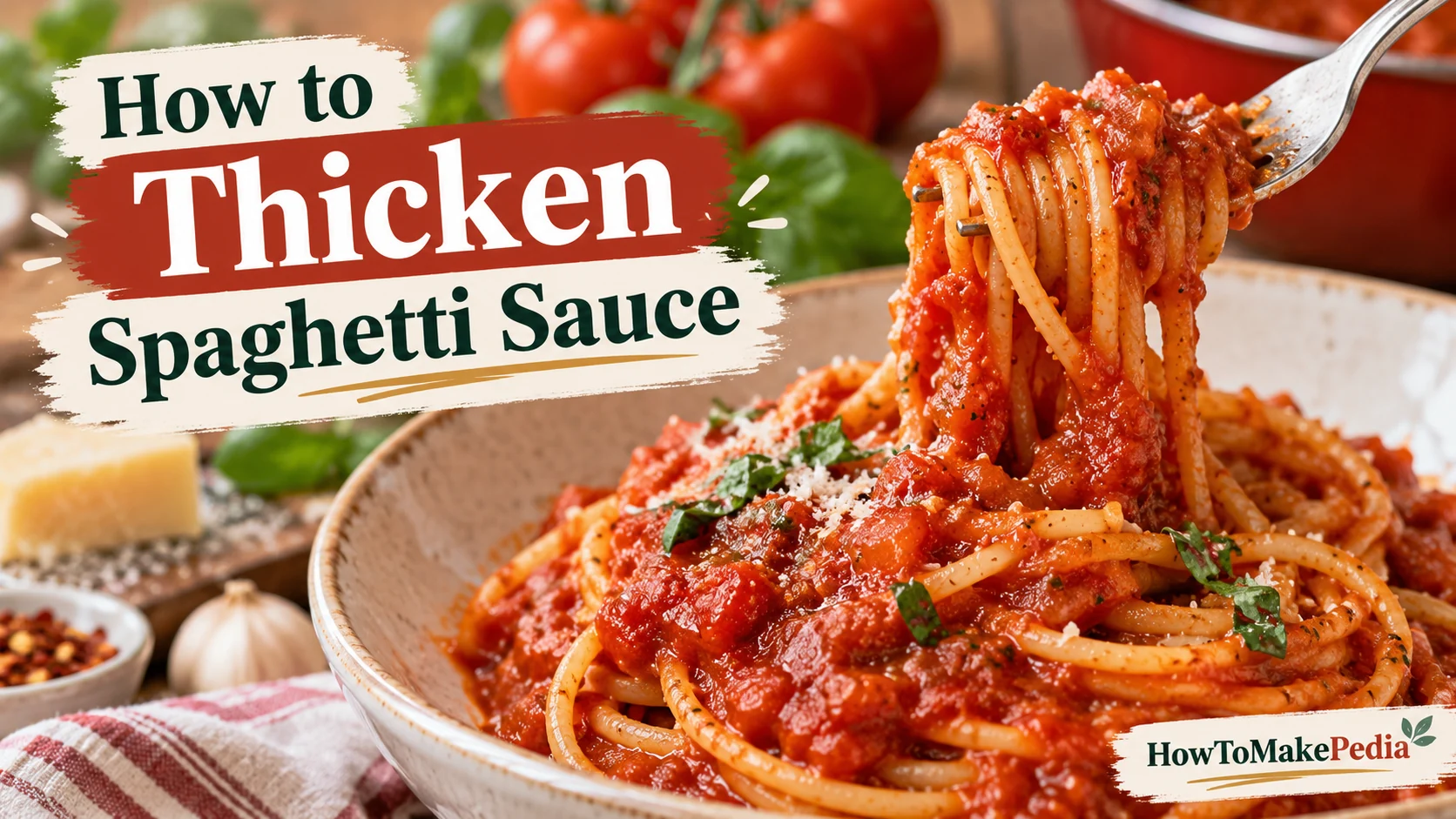

Watery spaghetti sauce can leave a puddle on your plate instead of coating your pasta. Fortunately, you can usually fix it without starting over.
The easiest way to thicken spaghetti sauce is to simmer it uncovered until some of the excess liquid evaporates. If you’re short on time, a little tomato paste can add body, while a small cornstarch slurry can thicken the sauce more quickly. If your sauce is already thick enough but won’t stick to the noodles, finishing the pasta directly in the sauce may be the better solution.
The right method depends on how thin your sauce is, what ingredients it contains, and whether you want to preserve its original flavor.
Quick Answer: How to Make Spaghetti Sauce Thicker
If dinner is almost ready and your sauce is too runny, start with these simple steps:
- Remove the lid. Let the sauce simmer gently so excess moisture can escape.
- Stir and check the texture. Give the sauce time to reduce before adding anything else.
- Add tomato paste if needed. Start with a small amount and stir until completely combined.
- Try a cornstarch slurry for a faster fix. Mix cornstarch with cold water before stirring it into the hot sauce.
- Finish your spaghetti in the sauce. Tossing the pasta with the sauce helps everything come together and improves how well the sauce coats the noodles.
For most traditional tomato-based spaghetti sauces, reducing the liquid is a good first choice because it doesn’t introduce another thickening ingredient.
Why Is My Spaghetti Sauce Watery?

Before adding a thickener, it helps to understand where the extra liquid came from.
Too much liquid in the tomatoes: Fresh tomatoes and some canned tomatoes contain substantial amounts of water. As they cook, that moisture enters the sauce.
Not enough simmering time: A sauce that hasn’t reduced may taste good but still be too loose to coat spaghetti.
Cooking with the lid on: A covered pot traps much of the steam, allowing moisture to drip back into the sauce.
Watery vegetables: Mushrooms, zucchini, onions, and other vegetables can release additional liquid as they soften.
Too much added water or broth: Adding more liquid than the sauce needs can dilute both its texture and flavor.
Pasta that wasn’t drained sufficiently: Excess cooking water carried into the pan can loosen an otherwise thick sauce.
Sometimes the problem isn’t the sauce itself. A reasonably thick tomato sauce can still slide off spaghetti if the noodles and sauce aren’t combined properly.
Identifying the cause makes it easier to choose a fix without unnecessarily changing the recipe.
Best Ways to Thicken Spaghetti Sauce
There isn’t one method that works equally well for every sauce. A simple marinara usually benefits from reduction, while a rushed weeknight sauce may need a quicker adjustment.
Method 1: Simmer the Sauce Uncovered
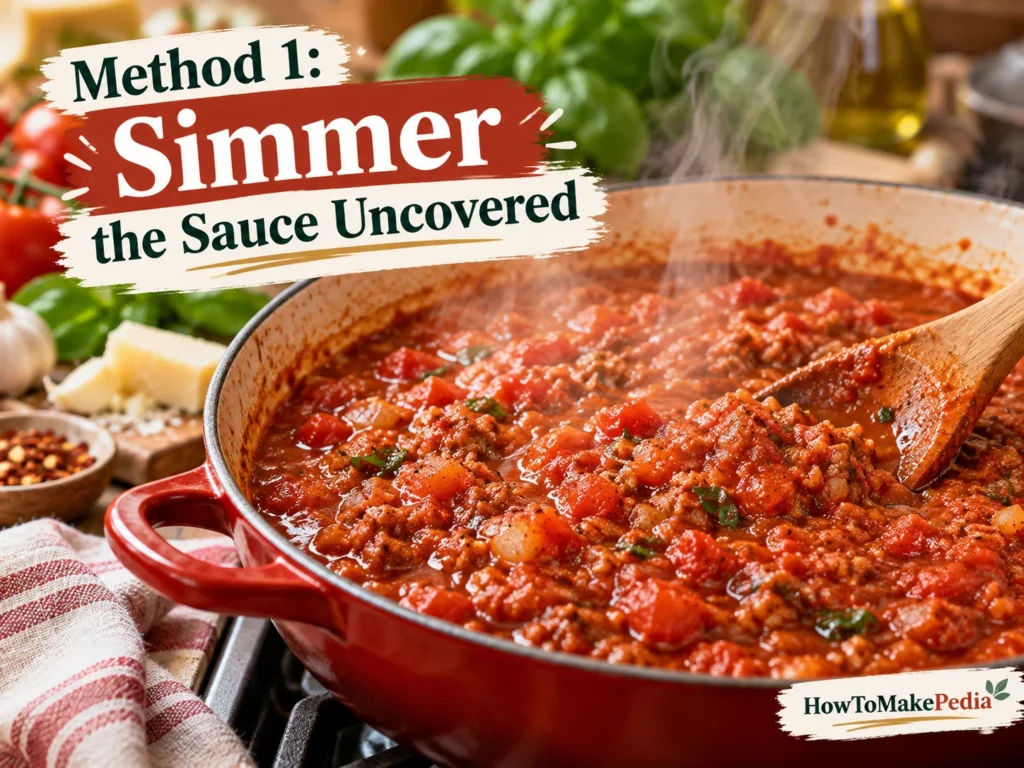
Simmering is one of the most reliable ways to thicken watery spaghetti sauce.
As the sauce heats, water escapes as steam. The remaining tomatoes, vegetables, and seasonings become more concentrated, creating a thicker texture.
How to do it:
- Pour the sauce into a saucepan or wide skillet.
- Bring it to a gentle simmer over medium-low heat.
- Leave the pan uncovered.
- Stir occasionally, paying particular attention to the bottom and edges.
- Check the consistency every few minutes.
- Remove the sauce from the heat when it reaches your preferred thickness.
A wider pan provides more surface area for evaporation and can help the sauce reduce faster than it would in a narrow, deep pot.
How long should you simmer spaghetti sauce?
There’s no exact time that works for every batch. A slightly watery sauce may need only a short additional simmer, while a large batch made with fresh tomatoes can require considerably longer.
The starting water content, pan size, heat level, and sauce quantity all make a difference.
Watch the sauce rather than relying only on the clock. It should gradually become less runny, and a spoon dragged through the pan should leave a more noticeable trail.
One caution: reduction concentrates salt, acidity, and other flavors along with the tomatoes. Taste the sauce before adding more seasoning, especially if you’re starting with a salty jarred sauce.
Method 2: Add Tomato Paste
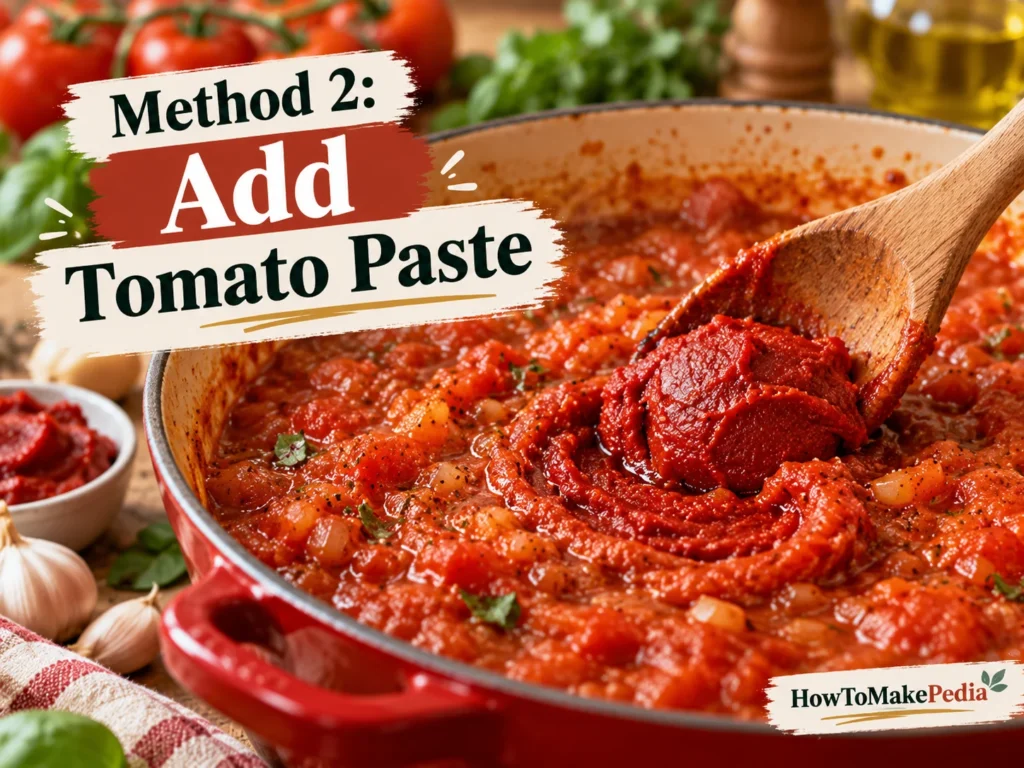
Tomato paste is a useful option when your sauce needs more tomato body but you don’t want to reduce it for a long time.
Unlike regular tomato sauce, tomato paste contains concentrated tomato solids and relatively little water. Stirring a small amount into spaghetti sauce can give it a fuller texture.
How to thicken spaghetti sauce with tomato paste:
- Keep the sauce at a gentle simmer.
- For approximately 2 cups of sauce, try starting with 1 teaspoon of tomato paste.
- Stir thoroughly until the paste is evenly incorporated.
- Let the sauce simmer briefly and check its texture.
- Add more in small increments if necessary.
- Taste before adjusting the seasoning.
The starting quantity is a cautious kitchen suggestion, not a tested ratio for every sauce. Different brands and recipes have different consistencies, and double-concentrated tomato paste may require less.
If you prefer a deeper tomato flavor, you can briefly cook the paste in a little olive oil before incorporating it into the sauce. This changes the flavor as well as the texture.
Avoid adding a large amount all at once. Too much paste can make the sauce taste overly concentrated and may overpower the other ingredients.
Tomato paste is especially useful for a sauce that tastes thin or diluted as well as looking watery.
Method 3: Use a Cornstarch Slurry
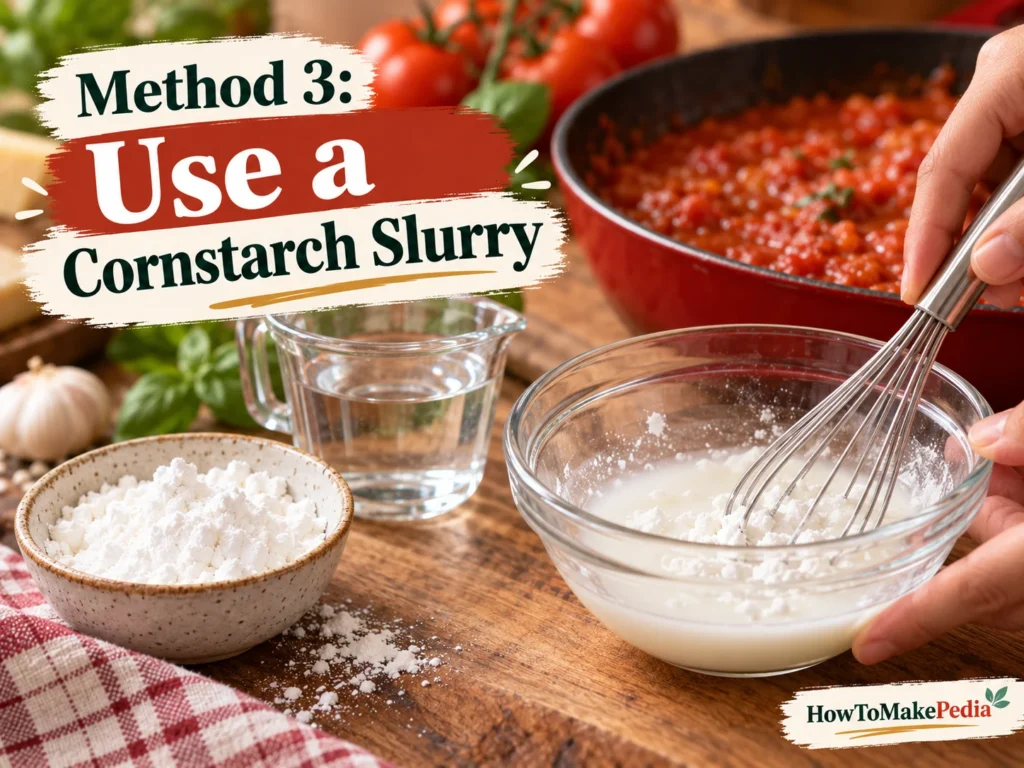
If you need to thicken spaghetti sauce quickly, a cornstarch slurry is another option.
Cornstarch absorbs liquid and swells when heated, helping the sauce develop a thicker consistency.
It is especially effective in smooth sauces, although it can produce a slightly glossy finish that differs from traditionally reduced tomato sauce.
How to thicken spaghetti sauce with cornstarch:
- Add 1 teaspoon of cornstarch to a small bowl.
- Mix it with 1 teaspoon of cold water until smooth.
- Bring approximately 2 cups of thin sauce to a gentle simmer.
- Stir the slurry again, then add it gradually while stirring the sauce.
- Let the sauce simmer briefly so the starch can thicken.
- Check the consistency before deciding whether more slurry is needed.
This is a deliberately conservative starting amount for a tomato sauce, not a guaranteed measurement. Standard thickening guidance for other sauces sometimes uses considerably more starch, but spaghetti sauce may only need a small adjustment.
If the sauce remains watery, prepare a little additional slurry rather than adding dry cornstarch directly.
Why use cold water?
Mixing cornstarch with cold liquid helps distribute the powder evenly. Adding dry starch to hot sauce can create stubborn lumps.
Cornstarch also doesn’t benefit from prolonged cooking once it has thickened the sauce. Excessive heating can weaken its thickening effect.
Use this method when speed matters, but stop before the sauce becomes sticky, overly shiny, or gummy.
Method 4: Finish the Pasta in the Sauce

Sometimes the sauce has enough body but won’t cling to the spaghetti.
In that case, you may not need another thickener. You need to bring the pasta and sauce together properly.
Follow these steps:
- Cook the spaghetti until just short of al dente.
- Reserve a small amount of its cooking water.
- Transfer the pasta to a skillet containing warm sauce.
- Toss gently over medium or medium-low heat.
- Add a splash of reserved pasta water only if needed to help the pasta and sauce combine.
- Continue tossing until the spaghetti is cooked to your liking and evenly coated.
Starchy pasta water helps the sauce, pasta starch, and fat form a more cohesive coating when everything is tossed together.
However, there’s an important distinction:
Adding pasta water does not automatically make a watery pot of spaghetti sauce thicker. Water initially adds more liquid. Its value comes from the starch and the way the sauce develops while being heated and tossed with the noodles.
If the sauce is already excessively watery, reduce it first.
Also, avoid finishing fully cooked spaghetti in the pan for too long. The extra cooking can leave the noodles soft or mushy.
Method 5: Blend Some of the Tomatoes or Vegetables
If your sauce contains large tomato pieces or thoroughly cooked vegetables floating in thin liquid, blending a portion may help create a more substantial texture.
This works particularly well with chunky homemade sauces.
Here’s how:
- Make sure the tomatoes and vegetables are fully softened.
- Remove a portion of the sauce from the pan or use an immersion blender.
- Carefully purée part of the cooked mixture.
- Stir the purée back into the remaining sauce.
- Simmer uncovered if additional water still needs to evaporate.
Blending breaks down the solid ingredients and distributes them throughout the liquid, giving the sauce a more uniform body.
It doesn’t actually remove water, so additional reduction may still be necessary.
For safety, keep an immersion blender submerged while operating to reduce splashing. If using a countertop blender, allow the mixture to cool somewhat and follow the manufacturer’s instructions for hot liquids, including appropriate fill limits and steam venting.
Never seal steaming-hot sauce inside a blender that isn’t designed for hot ingredients.
Method 6: Add Parmesan or Other Rich Ingredients
Freshly grated Parmesan can help a finished pasta dish feel richer and more cohesive. However, cheese isn’t always the best way to fix a pot of severely watery tomato sauce.
Parmesan also adds salt and a distinctive savory flavor.
Heavy cream can make tomato sauce feel smoother and richer, but it adds liquid, too. Cream cheese can change the texture more noticeably while making the sauce tangier and less traditionally tomato-forward.
Use these additions when you actually want the flavor they bring.
For a straightforward red spaghetti sauce, simmering or adding tomato paste is usually a more suitable first step.
Which Thickening Method Works Best?
| Method | Best Use | Approximate Time | Flavor Impact | Important Caution |
|---|---|---|---|---|
| Simmering uncovered | Watery tomato-based sauce | Variable; check every few minutes | Concentrates existing flavors | Can become too salty or scorch |
| Tomato paste | Sauce lacking tomato body | A few minutes after mixing | Stronger tomato flavor | Too much can overpower the sauce |
| Cornstarch slurry | Quick texture adjustment | Usually a few minutes | Little flavor change | Excess starch can become gummy |
| Finishing pasta in sauce | Sauce that doesn’t cling to noodles | Brief final cooking | Helps ingredients combine | Extra water can make thin sauce worse |
| Blending cooked vegetables | Chunky sauce with separated liquid | A few minutes, plus any reduction | More uniform vegetable flavor | Does not remove water |
| Cheese or dairy | Richer, creamier pasta dishes | During final cooking | Noticeably changes flavor | Adds salt, fat, or liquid |
These times are broad practical estimates, not guaranteed results. Sauce quantity, pan shape, moisture content, and heat level affect the outcome.
How to Fix Watery Spaghetti Sauce Step by Step
Not sure which method to choose? Use the condition of your sauce to guide your next step.
If the sauce is only slightly watery: Simmer it uncovered and stir occasionally. Check whether enough moisture has evaporated before changing the ingredients.
If the sauce tastes weak and lacks tomato body: Add a little tomato paste, stir well, and taste. It can improve both texture and tomato intensity.
If dinner is almost ready: Prepare a small cornstarch slurry, add it gradually, and heat just long enough to thicken.
If the sauce is chunky with liquid separating around the edges: Blend some of the softened tomatoes or vegetables, then reduce the sauce if needed.
If the sauce seems thick enough but slides off the noodles: Transfer slightly undercooked spaghetti into the sauce and toss until coated. Use reserved pasta water sparingly.
If the sauce already tastes too salty: Avoid prolonged reduction if possible, because removing more water will concentrate the salt further. Depending on the recipe, adding unsalted tomato purée or another compatible unsalted ingredient may provide a better balance.
The goal is to correct the specific problem rather than adding several thickening ingredients unnecessarily.
How to Know When Spaghetti Sauce Is Thick Enough
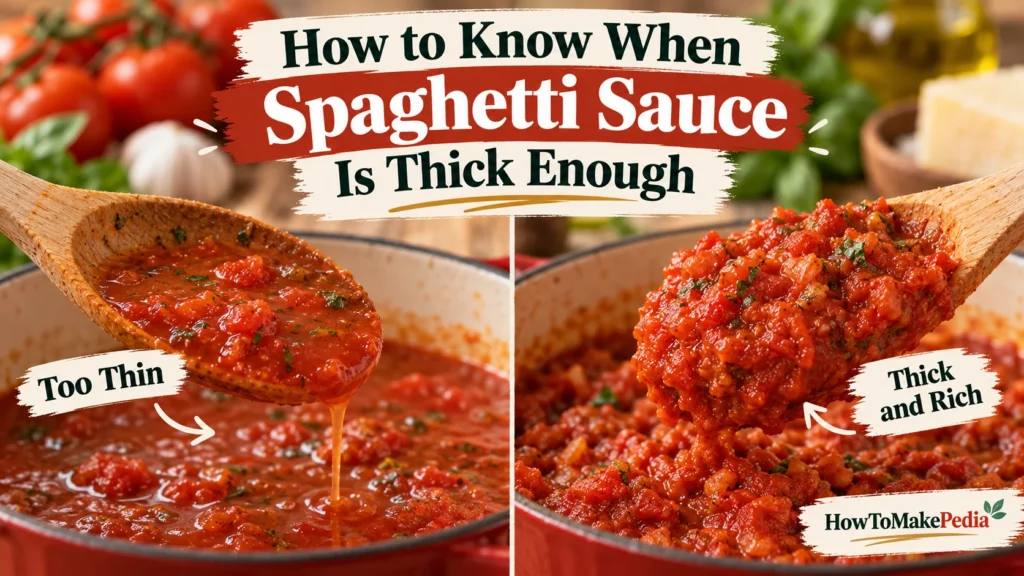
You don’t need special equipment to check spaghetti sauce consistency.
The spoon test
Dip a spoon into the sauce and lift it out. A well-reduced sauce should coat the spoon rather than immediately dripping away like thin tomato juice.
The spatula test
Drag a spatula or wooden spoon across the bottom of the pan.
A thicker sauce will leave a visible trail for a moment before slowly flowing back together.
Look for separated liquid
If a noticeable ring of watery liquid collects around the tomato mixture, the sauce may benefit from additional reduction or blending.
Check the pasta coating
Toss a few cooked spaghetti strands with a spoonful of sauce. The sauce should cling to the noodles without excessive liquid pooling beneath them.
Remember that sauce often becomes thicker as it cools. Stop cooking a little before it becomes excessively dense, particularly when using starch.
How to Thicken Spaghetti Sauce Without Tomato Paste
You can make a thicker sauce even if you don’t have tomato paste in your pantry.
Try simmering the sauce uncovered, using a wider skillet to encourage evaporation, or blending a portion of the cooked tomatoes and vegetables.
A small cornstarch slurry is another option if you need a faster texture adjustment.
For a classic tomato flavor with minimal added ingredients, reducing the sauce is often the simplest choice.
How to Make Thicker Spaghetti Sauce Without Cornstarch
Cornstarch isn’t necessary for a good spaghetti sauce.
You can thicken a tomato-based sauce by letting excess moisture cook away naturally. Tomato paste is another useful option when you want a stronger tomato base.
If the sauce contains cooked onions, carrots, or tomatoes, blending some of those ingredients may also improve its body.
All-purpose flour is sometimes used to thicken sauces, usually through a cooked flour-and-fat mixture called a roux. However, flour can alter the flavor and mouthfeel of red spaghetti sauce. Sprinkling raw flour directly into hot tomato sauce can cause lumps and leave an unpleasant floury taste.
For most homemade red sauces, reduction is a better starting point.
How to Thicken Store-Bought Spaghetti Sauce
Jarred spaghetti sauce can become thinner after heating, particularly when extra vegetables, broth, or other ingredients are added.
Here’s a simple way to adjust it:
- Pour the sauce into a skillet or saucepan.
- Warm it over medium-low heat.
- Simmer uncovered if it looks watery.
- Add a small amount of tomato paste if the sauce needs more body.
- Taste before adding salt or extra seasonings.
- Toss it with the cooked pasta just before serving.
Jarred sauces may already contain significant sodium, so avoid automatically adding salt after reducing them.
If the sauce contains added mushrooms, zucchini, or other watery vegetables, cook those ingredients separately first or give the combined sauce enough time for their moisture to evaporate.
How to Make Homemade Spaghetti Sauce Thicker
Homemade tomato sauce often needs more patience, especially when fresh tomatoes are involved.
Fresh tomatoes vary in water content, and their liquid becomes more noticeable as they break down.
To make a thicker homemade sauce:
- Choose a suitably wide saucepan for the amount you’re cooking.
- Allow the tomatoes to soften and release their liquid.
- Simmer uncovered until excess moisture evaporates.
- Stir more frequently as the sauce gets thicker.
- Purée some cooked ingredients if you want a smoother consistency.
- Add salt gradually, especially toward the end.
For chunky vegetable sauces, sauté moisture-heavy ingredients before combining them with the tomato base.
For meat sauce, brown the ground meat properly and drain excess grease if needed. Grease is not the same as water, and removing fat won’t necessarily thicken the tomato portion of the sauce. Cook ground beef and other ground meats to a safe internal temperature of 160°F; ground poultry should reach 165°F.
Avoid adding raw meat as a last-minute thickener. Meat must be cooked safely, and adding it also introduces additional juices and fat.
Common Spaghetti Sauce Problems and How to Fix Them
| Problem | Likely Cause | Practical Fix |
|---|---|---|
| Sauce is too watery | Excess liquid | Simmer uncovered |
| Liquid surrounds the tomatoes | Tomatoes haven’t broken down or reduced enough | Continue simmering or blend part of the sauce |
| Sauce tastes too acidic | Sharp tomato flavor or an unbalanced recipe | Adjust flavor cautiously with other ingredients; don’t confuse sweetness with actual acid reduction |
| Sauce becomes too thick | Excessive reduction or thickener | Add a little water or unsalted tomato purée |
| Cornstarch forms lumps | Starch was not dispersed properly | Whisk thoroughly or strain; prevent future lumps with a cold slurry |
| Tomato flavor is too concentrated | Too much paste or reduction | Dilute gradually with a compatible unsalted ingredient |
| Sauce is too salty | Salt became concentrated as water evaporated | Add unsalted tomato purée or another suitable unsalted ingredient |
| Sauce won’t stick to spaghetti | Pasta and sauce weren’t combined properly | Finish the noodles in the sauce |
| Jarred sauce turns thin | Added ingredients released water | Simmer uncovered and reassess |
| Vegetables release extra moisture | Vegetables were added without sufficient cooking | Cook down their moisture before combining |
| Sauce scorches | Heat was too high or stirring was insufficient | Transfer unburned sauce to a clean pan without scraping the burnt layer; discard if badly burnt |
| Sauce is gummy | Too much starch | Gradually dilute with compatible liquid; severe gumminess may not be fully reversible |
Common Mistakes That Keep Spaghetti Sauce Watery
Keeping the lid on the pot
If you’re trying to reduce the sauce, leaving the lid on traps moisture. Remove it so steam can escape.
Turning the heat too high
Aggressive boiling can produce splashes and scorch tomato solids. A controlled simmer is easier to manage. Use a wider pan when practical instead of relying on intense heat.
Adding too much tomato paste
Tomato paste isn’t flavorless. Start with a small amount and taste before adding more.
Using excessive cornstarch
More starch doesn’t always mean a better sauce. Add a little at a time and stop once the texture improves.
Adding dry flour to hot sauce
Dry flour can form lumps and require additional cooking to remove its raw taste. Use an appropriate cooked thickening method if flour is necessary.
Assuming pasta water always thickens sauce
Pasta water is primarily useful when pasta and sauce are tossed together. Pouring it into an already watery sauce can make the problem worse unless additional cooking reduces the liquid.
Forgetting vegetables release water
Mushrooms, zucchini, and other vegetables often release liquid during cooking. Allow for that moisture when preparing your sauce.
Overcooking the spaghetti
Finishing pasta in sauce works best when the noodles are not quite fully cooked when transferred. Keep tasting until they reach the desired texture.
How to Prevent Watery Spaghetti Sauce
Avoiding excess liquid is usually easier than correcting it later.
Start by using only the liquid your recipe needs. If you’re cooking with fresh tomatoes, allow adequate time for their juices to reduce.
Cook moisture-heavy vegetables before adding them to the sauce. Use a pan with enough surface area for evaporation, and don’t cover the pot when your goal is a thicker consistency.
Taste the sauce near the end of cooking, since reducing the liquid concentrates seasonings.
Finally, combine the spaghetti and sauce before serving instead of simply pouring a thin sauce over a mound of pasta.
These small adjustments can make a noticeable difference in the finished dish.
How to Store and Reheat Thickened Spaghetti Sauce
Leftover spaghetti sauce needs proper storage whether you’ve thickened it naturally or with an added ingredient.
Refrigerating: Transfer leftover sauce into clean, shallow containers so it cools quickly. Refrigerate within two hours of cooking, or within one hour when the surrounding temperature is above 90°F.
Keep the refrigerator at 40°F or below, and use most cooked leftovers within three to four days.
Freezing: Freeze sauce in suitable airtight portions. The USDA recommends three to four months for best quality for typical frozen leftovers.
Thawing: Thaw frozen sauce in the refrigerator, or use another USDA-approved thawing method followed by appropriate reheating.
Reheating: Reheat leftover sauce thoroughly to 165°F. The USDA also recommends bringing reheated sauces, soups, and gravies to a rolling boil.
Stir the sauce while heating so it warms evenly. Add a small splash of water if the sauce has become too thick in storage.
Sauces containing meat require the same careful temperature control and prompt refrigeration. Reducing a sauce does not extend its safe refrigerated storage period.
For complete food-safety guidance, consult the USDA’s Leftovers and Food Safety recommendations.
Frequently Asked Questions
What is the best way to thicken spaghetti sauce?
For most tomato-based spaghetti sauces, simmering uncovered is an excellent first choice. It removes excess water without introducing an additional thickening ingredient.
How do you make watery spaghetti sauce thicker?
Simmer the sauce uncovered until excess moisture evaporates. If it still lacks body, stir in a little tomato paste. A small cornstarch slurry is another option when time is limited.
Does spaghetti sauce get thicker the longer it simmers?
Generally, yes, as long as moisture can escape. However, the sauce can become overly concentrated or scorch if reduced too far.
Should spaghetti sauce simmer covered or uncovered?
Simmer it uncovered when your goal is to evaporate water and thicken the sauce. Covering the pan retains more moisture.
How long does it take spaghetti sauce to thicken?
It depends on the quantity, tomato water content, pan width, and cooking temperature. Check the sauce regularly instead of depending on a fixed time.
Can you thicken spaghetti sauce with tomato paste?
Yes. Tomato paste contains concentrated tomato solids that can give a watery sauce more body. Start with a small quantity because it also intensifies the tomato flavor.
Can you use cornstarch to thicken spaghetti sauce?
Yes. Mix cornstarch with cold water to make a smooth slurry, then stir it gradually into simmering sauce. Avoid using too much, since excess starch can create a gummy texture.
Can I use flour instead of cornstarch?
Flour can thicken sauces, but it generally needs more cooking and may affect the flavor and texture. A properly cooked roux is preferable to adding dry flour directly to hot tomato sauce.
How can I thicken spaghetti sauce without changing the taste?
Simmering uncovered is usually the best starting point because it doesn’t add a new ingredient. However, reduction concentrates the sauce’s existing flavors, so avoid cooking it down excessively.
Does pasta water make spaghetti sauce thicker?
Not directly. Pasta water adds liquid at first, but its starch can help the sauce bind to pasta when the noodles and sauce are tossed and finished together.
Why is my homemade spaghetti sauce still watery?
Possible causes include juicy tomatoes, too much added liquid, insufficient reduction, or vegetables releasing moisture. Cooking the sauce uncovered usually helps.
How do I make spaghetti sauce stick to pasta?
Transfer spaghetti that is just short of al dente into the warm sauce. Toss gently while finishing the pasta, using only a small amount of reserved starchy pasta water if necessary.
Final Thoughts
Learning how to thicken spaghetti sauce comes down to choosing the right solution for the problem.
If there’s simply too much water, simmer the sauce uncovered. If it needs a stronger tomato base, try a little tomato paste. If you’re in a hurry, a carefully prepared cornstarch slurry can help. And if the sauce won’t stay on the noodles, finishing the pasta directly in the sauce may be all you need.
Start with the simplest adjustment, check the texture as you go, and stop when the sauce coats your spaghetti without leaving excess liquid behind.
