
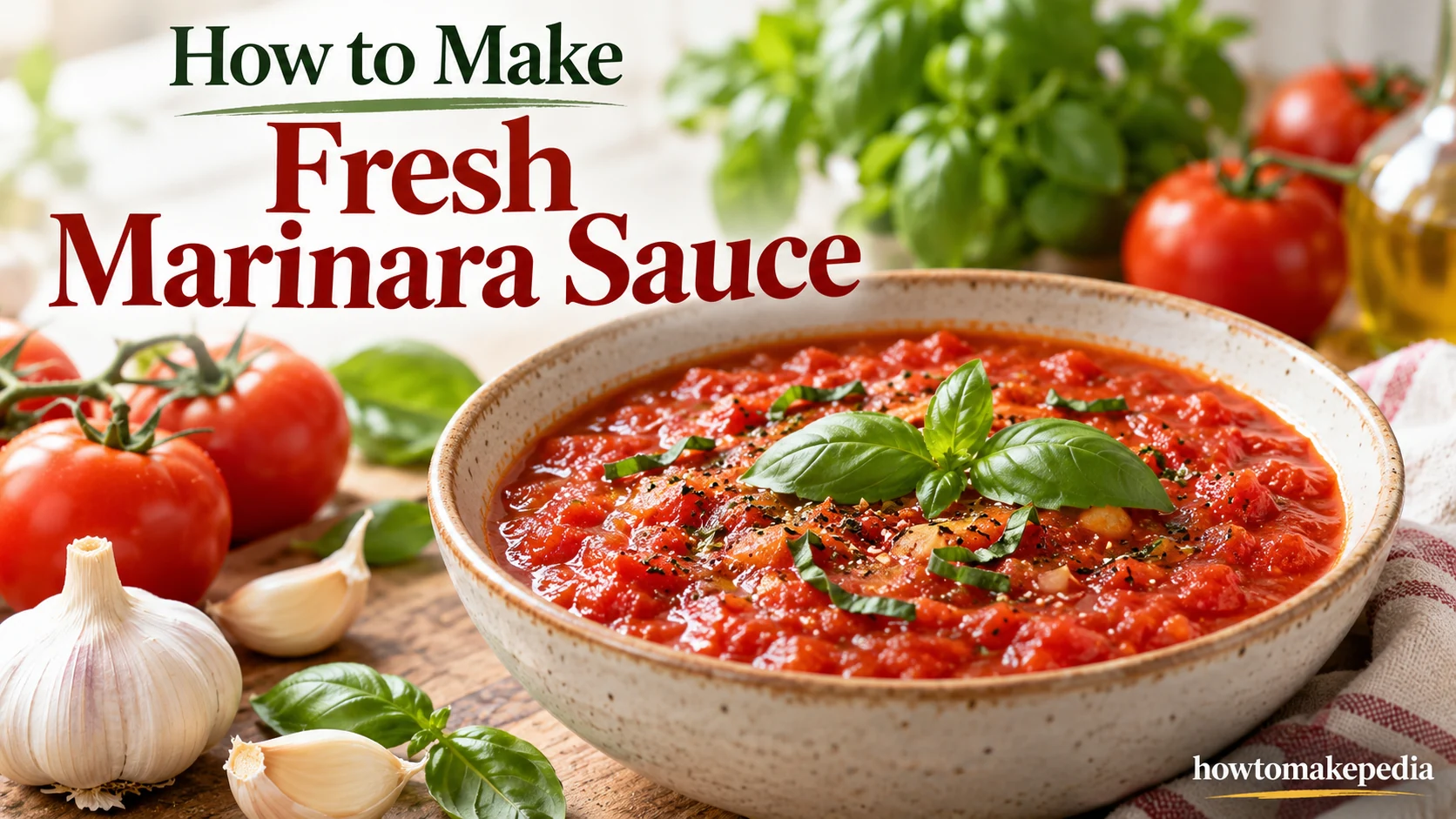

Fresh marinara sauce starts with ripe tomatoes, garlic, olive oil, and a handful of basil. Chop the tomatoes, gently cook the garlic, and let everything simmer until the sauce thickens. You can leave the tomato skins on for a rustic texture or remove them if you prefer a smoother sauce. This homemade version works for pasta, dipping, and baked Italian-style dishes.
Recipe at a glance
| Detail | Estimate |
|---|---|
| Prep Time | 15 minutes |
| Cook Time | 40–55 minutes |
| Total Time | 55–70 minutes |
| Servings | 4 |
| Yield | Approximately 2 cups |
| Cooking Method | Stovetop |
| Main Ingredient | Fresh tomatoes |
Note: These measurements, times, and yield are provisional. They should be confirmed through kitchen testing before publication.
What Is Fresh Marinara Sauce?
Marinara is a tomato-based sauce commonly made with garlic, olive oil, and herbs. It usually has a simpler ingredient list than many slow-cooked tomato sauces.
Fresh marinara uses ripe tomatoes instead of relying on canned tomatoes. The result depends heavily on the variety and ripeness of the tomatoes.
Some versions are smooth, while others have small pieces of tomato throughout. Both textures work well for homemade marinara.
Ingredients for Homemade Fresh Marinara Sauce

You only need a few basic ingredients for this recipe.
- 2½ pounds fresh ripe tomatoes (about 1.1 kg): Roma or other plum tomatoes are good choices, but ripe garden tomatoes also work.
- 2 tablespoons extra-virgin olive oil: Used to gently cook the garlic and add richness.
- 4 garlic cloves, finely chopped: Fresh garlic gives the sauce its savory flavor.
- ½ teaspoon dried oregano: Adds a familiar Italian-style herb flavor.
- ¾ teaspoon fine sea salt: Start with this amount and adjust after cooking.
- ¼ teaspoon freshly ground black pepper: Adds mild seasoning.
- ¼ cup loosely packed fresh basil leaves (about 10–12 medium leaves): Tear or chop them shortly before using.
Optional Ingredients
- ⅛ teaspoon crushed red pepper flakes: For a little heat.
- Up to ¼ teaspoon sugar: Only if the finished sauce tastes noticeably sharp.
- 1–2 tablespoons water: If the sauce becomes too thick during cooking.
Avoid adding extra water at the beginning. Fresh tomatoes naturally release liquid as they cook.
Best Tomatoes for Fresh Marinara Sauce
The tomatoes you choose affect the flavor, texture, and cooking time.
Roma Tomatoes
Roma tomatoes have relatively dense flesh and less water than many large slicing varieties. They are particularly useful when you want marinara that thickens without a long reduction.
Plum Tomatoes
Other ripe plum tomatoes also work well. Their meaty texture makes them suitable for a sauce that is thick but still easy to spoon.
Garden Tomatoes
Fresh garden tomatoes are another option, especially when they are fully ripe.
Large slicing tomatoes and some heirloom varieties can be especially juicy. They may need more simmering time before the sauce reaches the right consistency.
How to Choose Good Tomatoes
Look for tomatoes that:
- Feel heavy for their size.
- Have a ripe tomato aroma.
- Show an even, mature color for their variety.
- Are free from mold and significant damage.
- Give slightly when pressed but are not mushy.
You can mix tomato varieties if you have several kinds available.
How to Make Fresh Marinara Sauce Step by Step
This stovetop method uses chopped tomatoes and an uncovered simmer to remove excess moisture naturally.
Step 1: Wash and Prepare the Tomatoes

Rinse the tomatoes under cool running water. Gently rub their surfaces with your hands, then dry them with a clean towel.
Remove the stems and tough cores.
Cut the tomatoes into roughly ½-inch pieces, keeping the juices that collect on your cutting board.
You do not need to remove the seeds.
For this version, leave the skins on unless you specifically want a smoother texture.
Step 2: Prepare the Garlic and Basil
Peel four garlic cloves and chop them finely.
Remove the basil leaves from their stems. Tear or chop the leaves and keep them aside until the sauce is almost finished.
Preparing everything before heating the pan makes it easier to prevent the garlic from burning.
Step 3: Heat the Olive Oil
Place a wide, heavy-bottomed skillet or saucepan over medium-low heat.
Add two tablespoons of olive oil and let it warm gently.
The oil should look fluid and slightly shimmering, but it should not be smoking.
Step 4: Cook the Garlic
Add the chopped garlic to the warm oil.
Stir for about 30–60 seconds, just until fragrant. The garlic should remain pale rather than turning dark brown.
Add the dried oregano and optional red pepper flakes. Stir briefly, then move immediately to the next step.
Garlic becomes bitter when it burns, so keep the heat moderate.
Step 5: Add the Fresh Tomatoes
Carefully add the chopped tomatoes and all their collected juices.
Stir in the salt and black pepper.
Increase the heat to medium and bring the mixture to a gentle simmer.
As the tomatoes heat, they will soften and release additional liquid.
Use a wooden spoon to press larger tomato pieces against the side of the pan.
Step 6: Simmer Until the Marinara Thickens

Reduce the heat to medium-low and leave the pan uncovered.
Simmer gently for approximately 35–50 minutes, stirring every 5–10 minutes.
The sauce should bubble lightly rather than boil aggressively.
As it cooks, watch for these changes:
- The tomatoes soften and break apart.
- Excess liquid gradually evaporates.
- The color becomes deeper.
- The sauce begins to coat the back of a spoon.
- A spoon dragged across the bottom of the pan briefly leaves a visible trail.
Roma tomatoes may reach this stage sooner than particularly juicy garden tomatoes.
If the sauce begins sticking, reduce the heat and stir more frequently.
Step 7: Add Fresh Basil and Adjust Seasoning
When the marinara is almost thick enough, stir in the torn basil.
Cook for another 2–3 minutes.
Taste the sauce and adjust the salt or pepper if needed.
If it tastes sharp, first check the salt level. If the tomatoes still seem unusually acidic, stir in a small pinch of sugar, taste again, and add more only if necessary.
The sugar is optional. Good ripe tomatoes may not need any.
Step 8: Adjust the Texture
For chunky marinara, leave the sauce as it is.
For a less chunky sauce, mash the softened tomatoes with a spoon or potato masher.
For a smoother result, remove the pan from the heat and carefully use an immersion blender, keeping its blade fully submerged to reduce splashing.
If using a countertop blender, let the sauce cool sufficiently and follow the manufacturer’s hot-liquid blending instructions. Never seal a container of steaming-hot sauce in a way that traps pressure.
Step 9: Serve the Fresh Marinara Sauce
Once the texture and seasoning are right, remove the sauce from the heat.
Spoon it over freshly cooked pasta, use it as a dipping sauce, or add it to an appropriate baked dish.
If you are not serving it immediately, refrigerate it promptly using the storage instructions below.
Do You Need to Peel Tomatoes for Marinara Sauce?
No. Tomato peeling is optional for this recipe.
Leaving the skins on saves preparation time and creates a rustic texture. The skins soften during cooking, although some pieces may remain visible.
If you prefer a smooth, uniform sauce, peeling can help.
How to Peel Tomatoes
- Bring a saucepan of water to a boil.
- Cut a shallow X into the bottom of each tomato.
- Carefully lower the tomatoes into the water for approximately 30–60 seconds, until the skins begin loosening.
- Transfer them to a bowl of ice water.
- When cool enough to handle, peel away the loosened skins.
- Core and chop the tomatoes before proceeding with the recipe.
For a very smooth sauce, a food mill can also help remove skins and seeds after the tomatoes have softened.
Peeling and blending are texture choices, not requirements for making marinara.
How to Make Marinara Sauce Thicker

Fresh tomatoes contain a considerable amount of water, so homemade marinara may look thin during the first part of cooking.
The simplest way to thicken it is to continue simmering uncovered.
Use a Wide Pan
A wide skillet or saucepan provides more surface area for moisture to evaporate.
A narrow, deep pot generally reduces liquid more slowly.
Keep the Lid Off
Covering the pan traps much of the steam. Cooking uncovered allows more moisture to escape.
If the sauce splatters, lower the heat or use a splatter screen instead of tightly covering the pot.
Simmer Until the Consistency Looks Right
There is no exact reduction time for every tomato variety.
Continue cooking until the sauce is thick enough to cling to pasta or stay on a spoon without running off immediately.
For dipping, you may want a thicker consistency than you would use for a loose pasta sauce.
Avoid adding flour or cornstarch unless you are deliberately making a different kind of sauce. Normal reduction is usually sufficient.
Tips for Better Homemade Marinara Sauce
Choose ripe, flavorful tomatoes. Underripe or bland tomatoes can produce a sauce that tastes flat even after simmering.
Do not brown the garlic heavily. Gentle cooking develops its aroma without introducing bitter, burnt flavors.
Keep the simmer controlled. A vigorous boil increases splattering and can cause the sauce to stick as it reduces.
Add fresh basil toward the end. This helps preserve more of its fresh herbal aroma.
Season again after reducing. As water evaporates, the existing salt becomes more concentrated. Taste before adding more.
Use the spoon test. Watching how the sauce coats a spoon is more useful than relying only on the clock.
Blend only as much as needed. A few short pulses may produce the texture you want without completely pureeing the sauce.
Common Marinara Sauce Problems and Fixes
| Problem | Likely Cause | How to Fix It |
|---|---|---|
| Sauce is too watery | Juicy tomatoes or insufficient reduction | Simmer uncovered for another 5–15 minutes and reassess |
| Sauce tastes too sharp | Naturally acidic tomatoes or underseasoning | Check salt, then try a small pinch of sugar if needed |
| Sauce tastes bland | Mild tomatoes or insufficient seasoning | Add a little salt and fresh basil, then taste again |
| Garlic tastes burnt | Garlic browned too much in the oil | If badly burnt, restart the garlic and oil base; bitterness is difficult to remove |
| Sauce is too thick | Too much moisture evaporated | Stir in water 1 tablespoon at a time |
| Sauce is too chunky | Tomato pieces have not broken down enough | Mash or carefully blend part of the sauce |
| Sauce lacks fresh tomato flavor | Unripe tomatoes or excessive added seasonings | Use better-ripe tomatoes next time and keep the seasoning simple |
Fresh Marinara Sauce Variations
The basic recipe works without additional ingredients, but you can make a few small changes.
Spicy Marinara Sauce
Add ⅛ teaspoon crushed red pepper flakes with the garlic and oregano.
For more heat, increase the amount gradually after tasting.
Extra-Garlic Marinara Sauce
Increase the garlic from four cloves to five or six.
Cook it gently over medium-low heat. Adding more garlic does not mean you should increase the heat.
Smooth Fresh Marinara Sauce
Use peeled tomatoes or pass the cooked sauce through a food mill.
You can also carefully puree the finished sauce for a more uniform texture.
Chunky Fresh Tomato Marinara
Dice the tomatoes into slightly larger pieces and stir gently while they simmer.
Mash only the largest pieces. Skip the blending step.
What to Serve With Fresh Marinara Sauce

Fresh marinara can be used in several meals, not just spaghetti.
Pasta: Toss it with spaghetti, penne, or rigatoni. Add a little pasta cooking water if the sauce needs loosening.
Mozzarella sticks: Serve the marinara warm in a small bowl for dipping.
Meatball sandwiches: Spoon the sauce over cooked meatballs in a toasted roll, with cheese if desired.
Baked pasta: Use it in baked ziti or other pasta casseroles.
Eggplant Parmesan: Layer the sauce with prepared eggplant and cheese.
Garlic bread: Serve a thicker version alongside toasted garlic bread or breadsticks.
For a full guide to preparing tomato sauce specifically for pasta, a separate fresh tomato pasta sauce article can cover pasta cooking, sauce quantities, and combining the two.
How to Store and Freeze Fresh Marinara Sauce
Homemade marinara is a cooked leftover and needs proper temperature control.
Refrigerating Marinara Sauce
Transfer leftovers into clean, shallow, covered containers so they cool quickly.
Refrigerate within two hours of cooking, or within one hour if the food is exposed to temperatures above 90°F.
Store at 40°F or below and use within 3–4 days.
There is no need to leave a large pot on the counter until it reaches room temperature.
Freezing Marinara Sauce
Divide the sauce into portions and place it in freezer-safe containers or bags.
Leave suitable space for expansion if using rigid containers, and label each portion.
For best quality, aim to use frozen marinara within approximately 3–4 months. Longer continuous storage at 0°F may remain safe, but quality can decline.
Thawing and Reheating
For convenient thawing, place frozen sauce in the refrigerator.
You can also reheat it directly from frozen in a saucepan over controlled heat, stirring as it loosens.
When reheating leftovers, bring the sauce to a rolling boil and ensure it reaches 165°F throughout.
A little water may help restore the texture after freezing.
Can You Can This Marinara Sauce?
This recipe has not been developed or validated for shelf-stable home canning.
Do not treat it as a tested water-bath or pressure-canning formula. Home canning requires an appropriate research-tested recipe, including its required acidification and processing procedure.
For this recipe, use refrigeration or freezing.
Common Mistakes to Avoid
Starting With Poorly Ripe Tomatoes
The tomato is the main ingredient, so its flavor matters. Choose ripe tomatoes rather than expecting garlic and herbs to compensate for an underdeveloped tomato flavor.
Burning the Garlic
If garlic turns very dark before you add the tomatoes, start that step over with fresh oil and garlic.
Cooking Over High Heat
A hard boil may cause excessive splattering and sticking. A gentle simmer gives you better control over reduction.
Adding Too Much Sugar
Sugar should not be an automatic ingredient. Start without it and add only a small amount if the finished sauce needs balancing.
Forgetting to Taste After Reduction
The same amount of salt will taste stronger after the sauce has lost water. Make final seasoning adjustments near the end.
Frequently Asked Questions
Can You Make Marinara Sauce With Fresh Tomatoes?
Yes. Fresh ripe tomatoes can be chopped and cooked with olive oil, garlic, and herbs to make homemade marinara sauce. Simmer until enough moisture has evaporated.
Do You Need to Peel Tomatoes for Marinara?
No. Tomato skins can remain in the sauce for a rustic texture. Peeling is useful if you prefer a smoother finish.
What Tomatoes Are Best for Homemade Marinara?
Ripe Roma and other plum tomatoes are practical choices because of their relatively dense flesh. Flavorful garden and heirloom tomatoes also work, although juicier varieties may need longer cooking.
How Long Should Fresh Marinara Sauce Simmer?
For this proposed recipe, allow approximately 35–50 minutes of gentle uncovered simmering. Use the sauce’s thickness as your final guide.
Why Is My Fresh Marinara Sauce Watery?
Fresh tomatoes release liquid as they cook. The amount varies by tomato variety and ripeness. A longer uncovered simmer helps evaporate that excess moisture.
Is Fresh Marinara the Same as Tomato Pasta Sauce?
Marinara is one kind of tomato sauce frequently served with pasta. The broader term tomato pasta sauce can describe many preparations, including sauces with meat, vegetables, or other ingredients.
Can You Freeze Fresh Marinara Sauce?
Yes. Place it in freezer-safe portions and freeze promptly. Thaw safely and reheat thoroughly before serving.
Can I Make Marinara Without Sugar?
Yes. Sugar is entirely optional. Ripe tomatoes and proper seasoning may provide the balance you want without any added sweetener.
Fresh Marinara Sauce Recipe Card
Recipe Name: Fresh Marinara Sauce From Fresh Tomatoes
Description: A stovetop marinara made with ripe fresh tomatoes, gently cooked garlic, olive oil, oregano, and basil. An uncovered simmer reduces excess liquid for a naturally thick sauce.
Prep Time: 15 minutes
Cook Time: 40–55 minutes
Total Time: 55–70 minutes
Servings: 4
Estimated Yield: 2 cups
Course: Sauce
Cuisine: Italian-inspired
Equipment: Wide skillet or saucepan, knife, cutting board, wooden spoon
Ingredients
- 2½ pounds (about 1.1 kg) fresh ripe tomatoes, chopped
- 2 tablespoons extra-virgin olive oil
- 4 garlic cloves, finely chopped
- ½ teaspoon dried oregano
- ¾ teaspoon fine sea salt, plus more to taste
- ¼ teaspoon ground black pepper
- ¼ cup loosely packed fresh basil leaves, torn
- ⅛ teaspoon crushed red pepper flakes (optional)
- Up to ¼ teaspoon sugar (optional, only if needed)
- 1–2 tablespoons water (optional, to adjust consistency)
Instructions
- Prepare tomatoes: Wash, core, and chop the tomatoes into roughly ½-inch pieces. Reserve all the juices. Leave the skins on unless a smooth sauce is preferred.
- Heat oil: Warm the olive oil in a wide saucepan over medium-low heat.
- Cook garlic: Add the chopped garlic and cook for 30–60 seconds until fragrant but not browned. Stir in oregano and optional pepper flakes.
- Add tomatoes: Add the chopped tomatoes, collected juices, salt, and black pepper. Bring to a gentle simmer over medium heat.
- Reduce: Lower the heat to medium-low and simmer uncovered for about 35–50 minutes, stirring occasionally, until the tomatoes soften and the sauce thickens.
- Finish: Stir in the basil and cook for another 2–3 minutes. Taste and adjust seasoning. Add a small pinch of sugar only if necessary.
- Adjust texture: Leave chunky, mash with a spoon, or carefully blend for a smoother sauce.
- Serve: Use warm or divide promptly into shallow containers for safe storage.
Recipe Notes
- Roma tomatoes generally need less reduction than very juicy slicing tomatoes.
- The sauce yield and cooking time are estimates and depend on tomato variety, pan size, and desired thickness.
- Tomato peeling is optional.
- Additional water is only needed if the sauce becomes too thick.
- The optional blanching method adds preparation time.
- All quantities should be verified in a real kitchen before describing this recipe as tested.
Storage
Refrigerate promptly in covered shallow containers and use within 3–4 days. Freeze in suitable containers for approximately 3–4 months for best quality. Reheat leftover sauce thoroughly to 165°F, bringing it to a boil.
Final Thoughts
Fresh marinara sauce doesn’t require an extensive ingredient list. Ripe tomatoes, gently cooked garlic, and a controlled simmer do most of the work.
The main thing to watch is the consistency. Let the sauce reduce until it suits your intended use, then finish with fresh basil and adjust the seasoning. Keep it chunky for a rustic marinara or blend it if you prefer a smoother sauce.
