
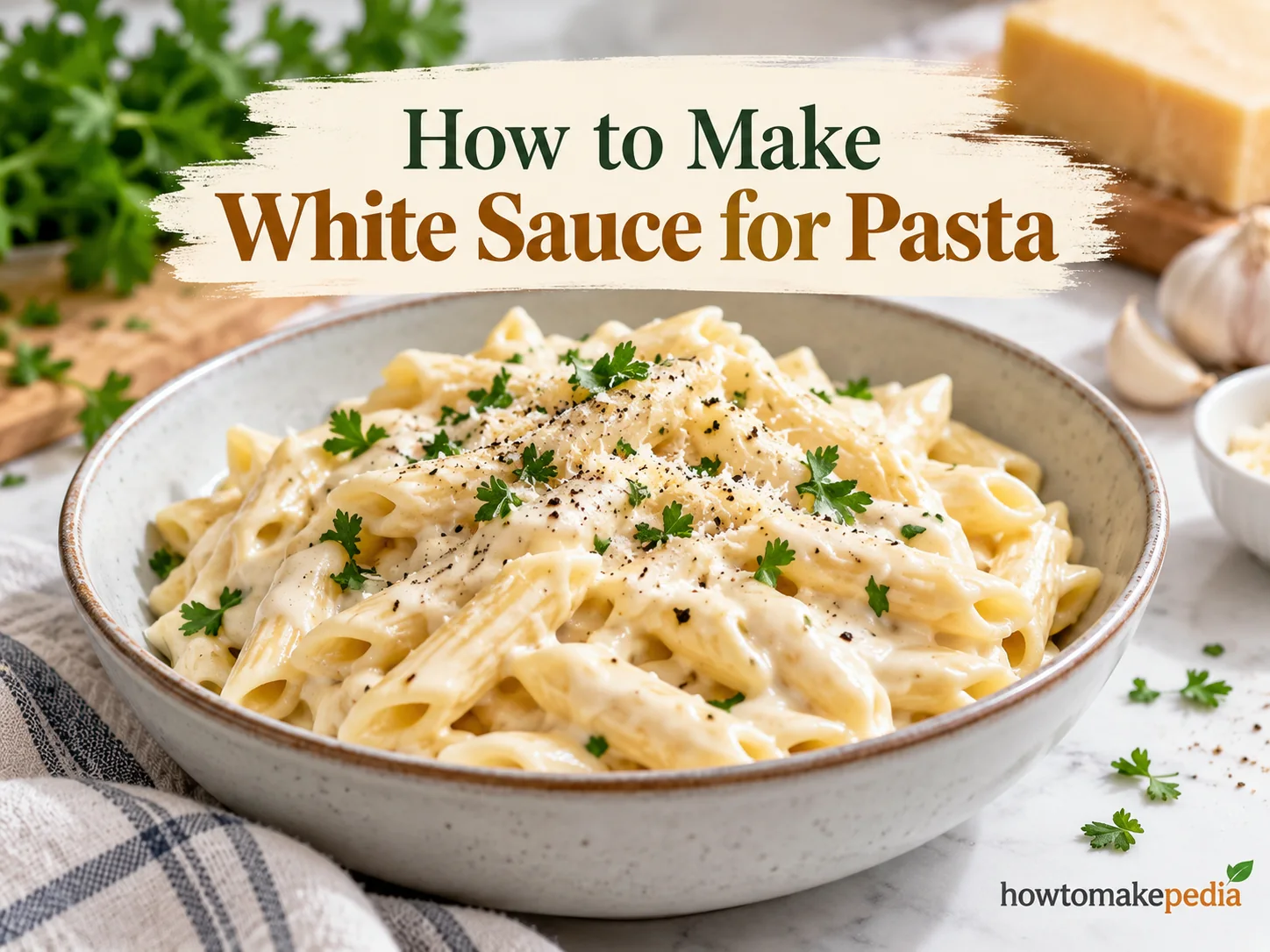

Making white sauce for pasta is simple when you have butter, flour, and milk. Melt the butter, whisk in the flour, then gradually add milk and cook until the sauce is smooth and lightly thickened. You don’t need heavy cream or cheese.
This homemade white pasta sauce takes about 10–12 minutes to prepare once the ingredients are ready. Toss it with hot pasta for a simple, creamy meal.
Quick Recipe Overview
| Recipe Details | Information |
|---|---|
| Prep Time | 5 minutes |
| Cook Time | Approximately 20 minutes, including pasta |
| Total Time | Approximately 25 minutes |
| Servings | 4 modest portions |
| Sauce Yield | Approximately 2 cups |
| Pasta Quantity | 8 ounces dry pasta |
| Main Ingredients | Butter, flour, milk |
| Heavy Cream Required | No |
| Cheese Required | No |
What Is White Sauce for Pasta?
White sauce is a creamy, milk-based sauce thickened with butter and flour. It’s closely related to béchamel, one of the traditional French mother sauces.
The process begins with a roux, which is a mixture of flour and fat cooked together. When milk is added and heated, the flour’s starch helps thicken the liquid.
The finished sauce should be smooth, creamy, and thick enough to cling to pasta without forming a heavy paste.
Is White Sauce the Same as Alfredo Sauce?
Not exactly.
A basic béchamel-style white sauce uses butter, flour, and milk. Traditional Roman Alfredo-style pasta relies on butter, Parmesan, and pasta water rather than a flour-based sauce.
Many American Alfredo recipes also contain cream, garlic, or other ingredients.
White sauce is a useful alternative when you want creamy pasta without heavy cream or cheese.
Ingredients for Homemade White Pasta Sauce
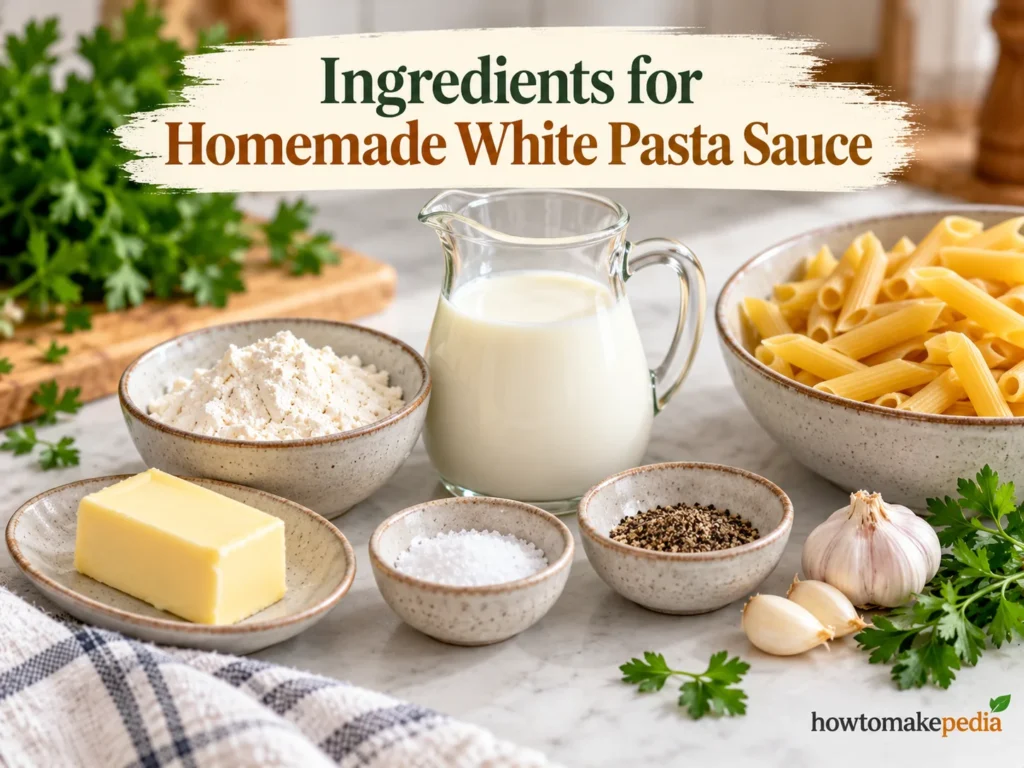
You’ll need five everyday ingredients for the sauce, plus pasta if you’re making a complete meal.
Main Ingredients
| Ingredient | Amount | Purpose |
|---|---|---|
| Unsalted butter | 3 tablespoons | Adds richness and forms the roux |
| All-purpose flour | 3 tablespoons | Thickens the sauce |
| Whole milk | 2 cups | Creates the creamy base |
| Fine salt | ¼ teaspoon, plus more to taste | Seasons the sauce |
| Ground black pepper | ⅛ teaspoon | Adds mild peppery flavor |
| Dry pasta | 8 ounces | Makes four modest servings |
You’ll also need water and salt for boiling the pasta.
Optional Ingredients
These ingredients are not necessary for the basic sauce.
- Fresh garlic: 1 small clove, finely minced, for a garlic-flavored sauce.
- Parmesan cheese: ⅓ cup finely grated, for a richer, cheesier version.
- Dried Italian seasoning: ½ teaspoon for an herby flavor.
- Fresh parsley: 1 tablespoon, finely chopped, for finishing.
- Ground nutmeg: A small pinch, about 1/16 teaspoon, for a subtle warm flavor.
You can add one or two of these ingredients according to your preference.
Can You Use 2% Milk Instead of Whole Milk?
Yes. You can replace whole milk with the same amount of 2% milk.
The sauce will usually taste a little less rich, but the flour will still thicken it.
For the closest match to the intended texture, whole milk is the better starting point.
Equipment You’ll Need
- Medium saucepan or deep skillet
- Large pot for pasta
- Whisk
- Measuring cups and spoons
- Colander
- Wooden spoon or silicone spatula
A saucepan with a heavy bottom can help prevent the milk-based sauce from scorching.
How to Make White Sauce for Pasta Step by Step
The key to a smooth white sauce is controlling the heat and whisking the flour and milk together thoroughly.
Step 1: Prepare the Ingredients
Measure 3 tablespoons of butter, 3 tablespoons of all-purpose flour, and 2 cups of milk.
Keep the milk within reach so you can add it without leaving the roux unattended.
Measure the salt and pepper. If you’re using garlic or herbs, prepare them now.
Having everything ready makes the sauce easier to manage.
Step 2: Cook the Pasta
Bring a large pot of salted water to a boil.
Add 8 ounces of dry penne, fettuccine, spaghetti, or another pasta.
Cook according to the package directions until al dente, meaning tender but still slightly firm when bitten.
While the pasta cooks, begin making the white sauce in a separate saucepan.
Before draining, reserve ½ cup of the starchy pasta cooking water.
Drain the pasta without rinsing it.
Step 3: Melt the Butter
Place a medium saucepan over medium-low heat.
Add 3 tablespoons of unsalted butter.
Allow it to melt gently. The butter should become liquid and may begin to foam slightly, but it shouldn’t turn dark brown.
If the butter starts browning quickly, lower the heat.
Optional garlic: If making garlic white sauce, add 1 small minced garlic clove to the melted butter. Stir for approximately 20–30 seconds until fragrant, then proceed with the flour. Do not let the garlic burn.
Step 4: Add the Flour and Make a Roux
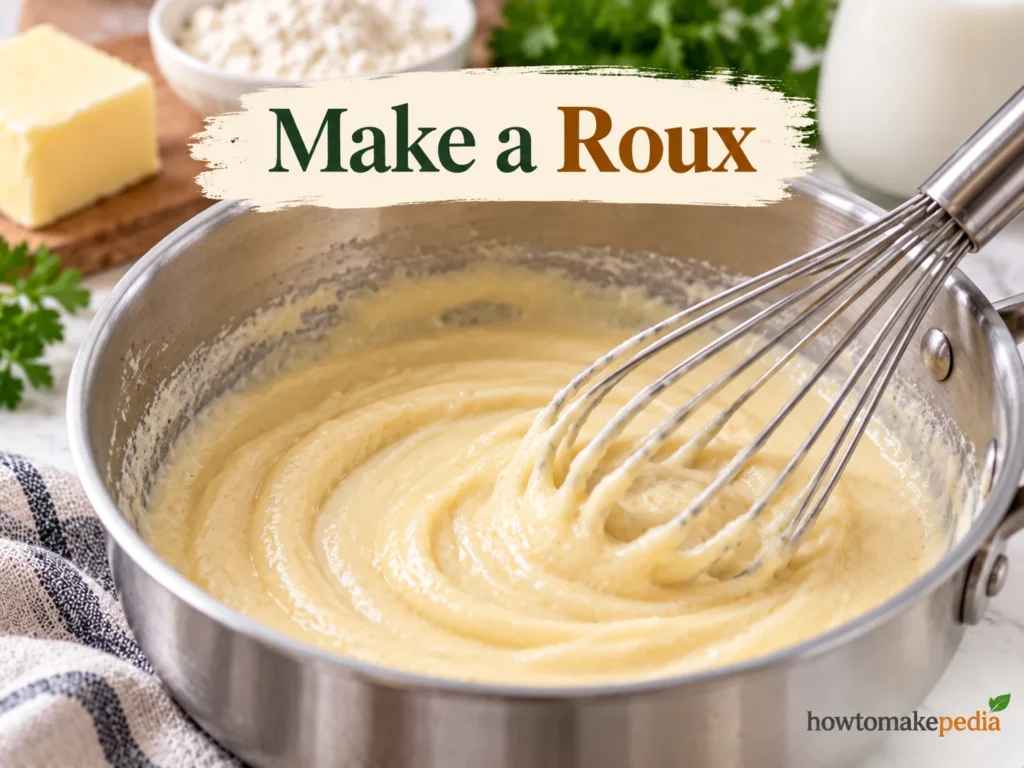
Sprinkle 3 tablespoons of all-purpose flour into the melted butter.
Whisk immediately until the flour and butter form a smooth paste.
Continue cooking over medium-low heat for approximately 2 minutes, stirring constantly.
The mixture should look pale and slightly bubbly. It may resemble a soft paste or wet sand.
This step helps remove the raw flour taste and prepares the flour to thicken the milk.
Don’t let the roux turn dark brown. A pale roux is better suited to a traditional white sauce.
Step 5: Gradually Add the Milk
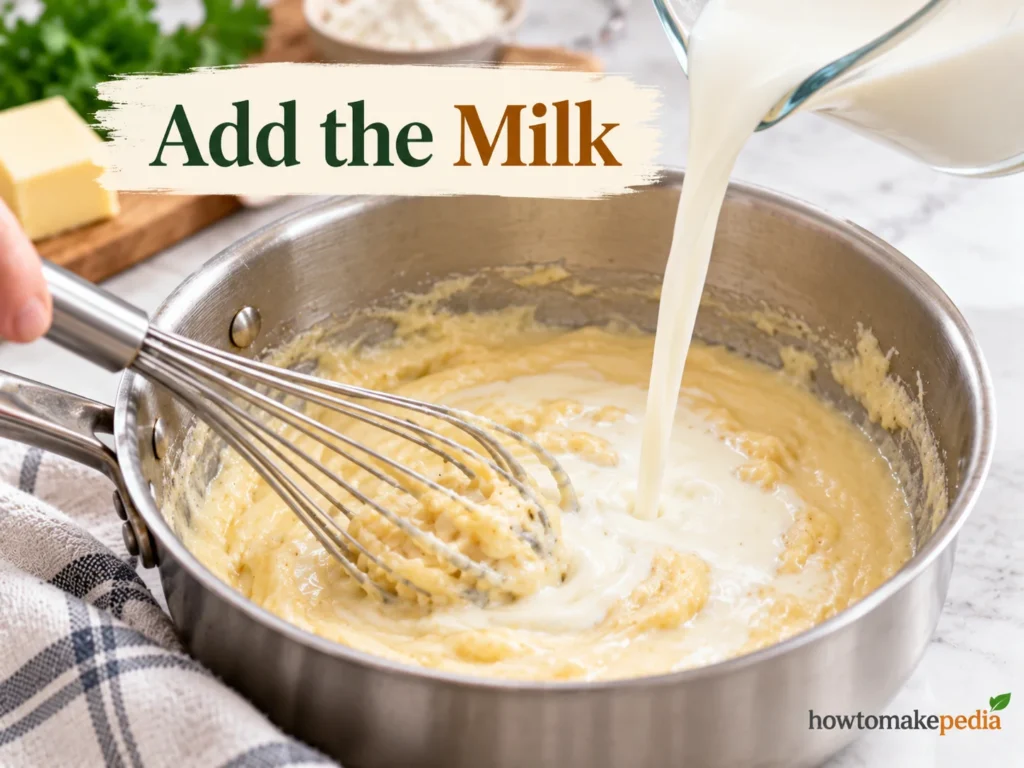
Pour approximately ½ cup of the milk into the saucepan while whisking.
At first, the mixture may become very thick. Continue whisking until it loosens and looks smooth.
Add another ½ cup of milk, whisking again.
Gradually add the remaining cup until all 2 cups are incorporated.
Keep the heat around medium-low to medium.
Both cold and warm milk can work. What matters most is whisking properly and giving the flour time to disperse before the sauce thickens.
If you notice small lumps, whisk thoroughly before adding more milk.
Step 6: Cook Until the Sauce Thickens
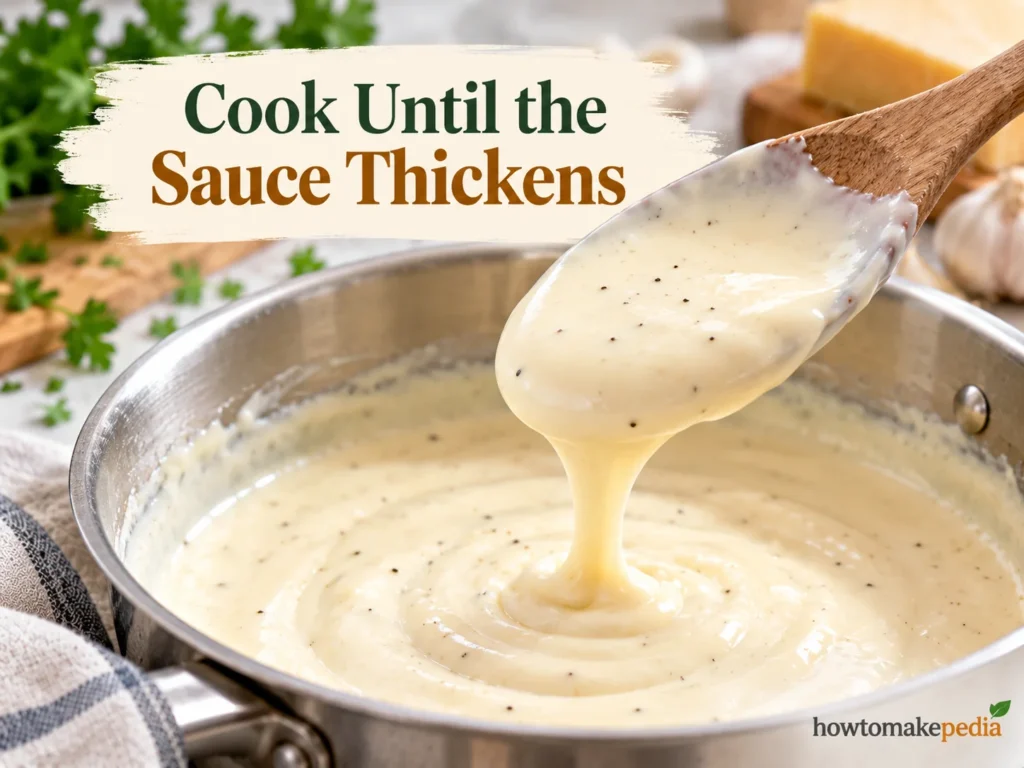
Bring the sauce to a gentle simmer over medium heat, then reduce the heat if necessary.
Continue cooking for approximately 4–6 minutes, stirring frequently and scraping the bottom and corners of the pan.
As the mixture heats, the flour begins to thicken the milk.
The finished sauce should be:
- Smooth and creamy
- Easy to stir
- Thick enough to lightly coat the back of a spoon
- Loose enough to pour and toss with pasta
To check the texture, dip a spoon into the sauce and draw a finger through the coating on its back. If the line remains visible briefly, the sauce has thickened.
Don’t wait for the sauce to become as thick as mashed potatoes. Pasta absorbs moisture, so an overly thick sauce can become sticky when mixed with the noodles.
Step 7: Season the White Sauce
Stir in ¼ teaspoon of fine salt and ⅛ teaspoon of ground black pepper.
Taste carefully and add a little more salt if necessary.
For extra flavor, stir in ½ teaspoon of dried Italian seasoning or a small pinch of nutmeg.
If using Parmesan, remove the saucepan from direct heat and gradually stir in ⅓ cup of finely grated cheese.
Mix until incorporated.
Avoid boiling the sauce after adding cheese because excessive heat may cause a rough or grainy texture.
Step 8: Combine the Pasta and White Sauce
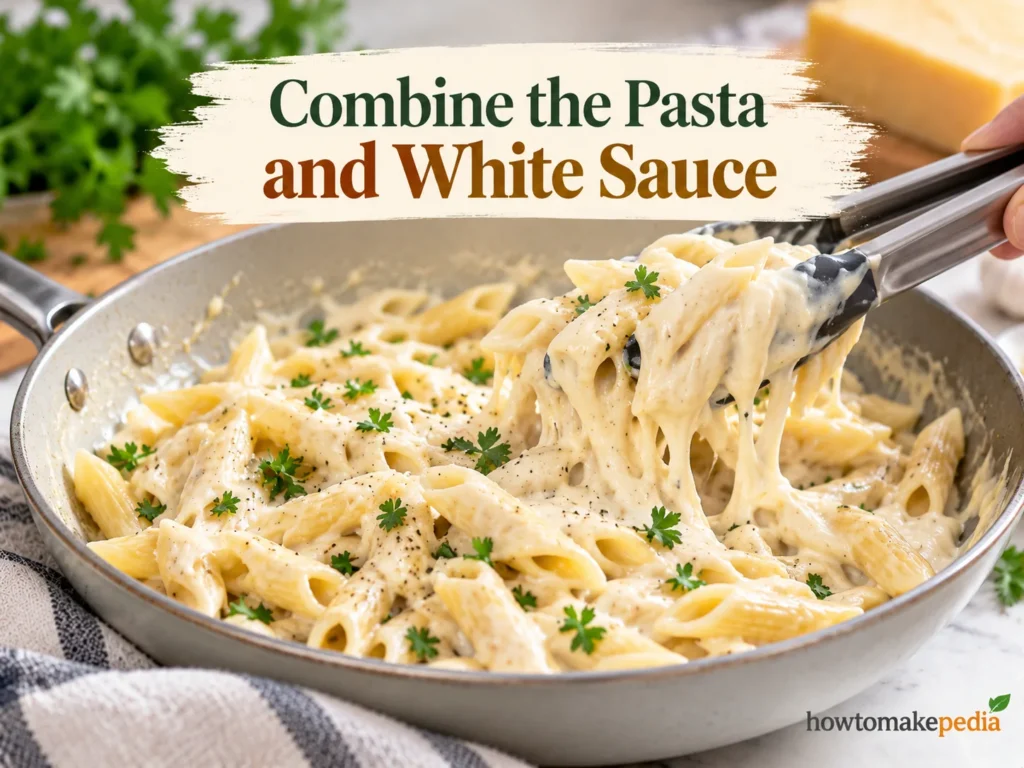
Add the drained pasta to the saucepan containing the white sauce, or transfer everything to a large skillet.
Toss gently until the pasta is evenly coated.
If the sauce becomes too thick, add 1 tablespoon of reserved pasta water and toss again.
Repeat as needed.
The sauce should cling to the noodles without pooling heavily at the bottom of the pan or forming sticky clumps.
Finish with chopped parsley or a little extra black pepper, if desired.
Serve while hot.
Tips for Making Smooth and Creamy White Sauce
A few small cooking details make a noticeable difference.
Keep the Heat Moderate
Medium-low heat is useful when melting the butter and cooking the roux.
After adding milk, medium heat can help the sauce reach a gentle simmer.
Avoid prolonged vigorous boiling. Milk-based sauces can scorch, and cheese-enriched versions are especially sensitive to excessive heat.
Whisk the Milk Thoroughly
Add the milk in portions if you’re new to making white sauce.
Whisk until each addition is smooth before adding more.
A properly whisked sauce should not contain noticeable flour lumps.
Cook the Flour Before Adding Milk
Don’t rush the roux.
Cooking the butter and flour together briefly improves the flavor and reduces the raw flour taste.
Keep the roux pale rather than browning it heavily.
Adjust the Sauce Before Serving
White sauce thickens as it cools and as pasta absorbs its moisture.
If it becomes too thick, stir in a small amount of warm milk or reserved pasta water.
Add liquid gradually so the sauce doesn’t become watery.
Season After the Sauce Thickens
A plain milk-based sauce can taste mild.
Salt, pepper, herbs, garlic, or a little cheese can improve the flavor.
Taste near the end, especially if you’re adding salty Parmesan.
How to Fix Common White Sauce Problems
White sauce is relatively simple, but heat, flour, and milk don’t always behave exactly as expected.
Use this troubleshooting guide to identify the problem.
| Problem | Likely Cause | How to Fix It |
|---|---|---|
| Sauce is too thick | Too much evaporation or flour, or sauce has cooled | Whisk in warm milk, 1 tablespoon at a time |
| Sauce is too thin | Not simmered long enough or too much liquid | Simmer gently for a few more minutes while stirring |
| Sauce is lumpy | Flour wasn’t dispersed evenly | Whisk vigorously; strain or carefully blend if needed |
| Sauce tastes like raw flour | Roux or sauce wasn’t cooked sufficiently | Continue simmering gently for a few minutes |
| Sauce tastes bland | Not enough seasoning | Add salt and pepper gradually; try optional garlic or herbs |
| Sauce is grainy | Cheese overheated or didn’t incorporate smoothly | Remove from heat and whisk in a little warm milk; improvement isn’t guaranteed |
| Sauce is browned or scorched | Excessively high heat | Transfer unburned sauce without scraping the bottom; restart if the flavor is burnt |
How to Thicken White Sauce Without Adding More Flour
If the sauce is slightly thin, continue simmering it over gentle heat for a few minutes.
Stir frequently and check its consistency.
As some moisture evaporates, the sauce will become thicker. It will also thicken somewhat as it cools.
Don’t add dry flour directly to the finished sauce because it can produce lumps and an unpleasant raw flour taste.
How to Fix Lumpy White Sauce
Remove the saucepan from direct heat and whisk firmly.
If small lumps remain, pass the sauce through a fine-mesh strainer.
An immersion blender can also help disperse some lumps, but use caution with hot liquid.
Prevention is easier: whisk the flour into the butter completely before adding milk.
Easy White Pasta Sauce Variations
Once you understand the basic method, it’s easy to change the flavor without learning a completely different recipe.
Garlic White Sauce for Pasta
Add 1 small minced garlic clove to the melted butter.
Cook for about 20–30 seconds over medium-low heat, stirring until fragrant.
Add the flour and continue with the regular recipe.
The garlic should remain pale rather than becoming deeply browned.
Parmesan White Sauce
Follow the main recipe until the sauce is thickened and seasoned.
Remove the saucepan from direct heat.
Add ⅓ cup of finely grated Parmesan gradually, stirring until incorporated.
Freshly grated cheese generally blends more readily than thick, packaged shreds.
This makes a cheese-enriched white sauce, similar in style to a light Mornay sauce.
Taste before adding additional salt.
White Sauce Without Heavy Cream
The basic recipe already uses milk instead of heavy cream.
To make it, combine 3 tablespoons butter, 3 tablespoons flour, and 2 cups milk using the instructions above.
No cream is necessary.
White Sauce Without Cheese
Simply follow the main recipe without the optional Parmesan.
Butter, flour, and milk are enough to create a creamy texture.
You can add a little garlic or parsley if you want more flavor.
Herb White Pasta Sauce
Stir ½ teaspoon of dried Italian seasoning into the thickened sauce.
For a fresher flavor, finish with 1 tablespoon of chopped fresh parsley.
You can also use a small amount of fresh basil shortly before serving.
White Sauce With 2% Milk
Replace the 2 cups of whole milk with 2 cups of 2% milk.
Use the same cooking method, and give the sauce enough time to thicken.
Expect a somewhat lighter mouthfeel.
Best Pasta to Serve With White Sauce
This sauce works with several familiar pasta shapes.
Penne: The hollow tubes hold some sauce inside, making each bite creamy.
Fettuccine: Wide, flat noodles are easy to coat with a smooth white sauce.
Rigatoni: The ridged surface helps catch the sauce, while the large tubes make it useful for adding vegetables.
Spaghetti: A simple option when you want white sauce pasta using ingredients already in your pantry.
Rotini: The spirals hold sauce between their curves and work well for family pasta dishes.
Start with 8 ounces of dry pasta for the sauce made in this recipe.
For a meal with larger portions or extra chicken and vegetables, adjust the pasta quantity and sauce accordingly.
How to Store and Reheat White Pasta Sauce
You can make white sauce ahead of time, but dairy-based sauces need proper storage and reheating.
Refrigerating White Sauce
Allow the sauce to stop steaming heavily, then transfer it promptly to a shallow, airtight container.
Refrigerate at 40°F or below within 2 hours of cooking. If the surrounding temperature is above 90°F, refrigerate within 1 hour.
Use refrigerated leftovers within 3–4 days.
The same general storage guidance applies to cooked pasta mixed with the sauce.
Can You Freeze White Sauce?
Yes, but freezing may change its texture.
Milk-based sauces can sometimes become watery or grainy after thawing.
Freeze in a suitable airtight container, leaving a little room for expansion.
For convenient meal planning and better eating quality, consider using frozen portions within 1–2 months.
Thaw in the refrigerator before reheating.
How to Reheat White Pasta Sauce
Transfer the sauce to a saucepan and stir frequently while reheating.
Previously cooked leftovers should reach 165°F. USDA also recommends bringing reheated sauces and gravies to a rolling boil.
After safe reheating, whisk thoroughly and adjust the consistency with a little milk if necessary.
If the sauce contains Parmesan, it may not return to its original smooth texture after prolonged heating.
For pasta leftovers, stir gently so the noodles heat evenly without breaking apart.
Common Mistakes to Avoid
Using Heat That’s Too High
Butter and milk can scorch.
Start with medium-low heat and increase it only as needed to bring the sauce to a gentle simmer.
Browning the Roux Too Much
A dark roux changes the color and flavor of the sauce.
For white pasta sauce, cook the flour just long enough to remove its raw taste while keeping the mixture pale.
Adding Milk Without Whisking
Pouring milk into a poorly mixed roux can leave pockets of dry flour.
Whisk the butter and flour thoroughly, then incorporate the milk until smooth.
Not Cooking the Sauce Long Enough
The mixture needs to heat sufficiently for the flour to thicken the milk.
If it still looks watery, give it a few additional minutes at a gentle simmer.
Adding Too Much Salt Before Tasting
Parmesan and salted pasta water can increase the saltiness of the finished dish.
Start with the suggested seasoning and adjust at the end.
Making the Sauce Too Thick
The sauce should be creamy and pourable before you add pasta.
If it looks stiff, loosen it with a small amount of milk or reserved pasta water.
Boiling Cheese-Enriched Sauce Aggressively
When making the Parmesan variation, remove the pan from direct heat before adding cheese.
Stir gradually to reduce the risk of a grainy finish.
Frequently Asked Questions
Can I make white sauce for pasta without heavy cream?
Yes. The basic recipe uses butter, flour, and milk. The flour thickens the sauce, so heavy cream isn’t necessary.
Can I use 2% milk instead of whole milk?
Yes. Use the same quantity. The sauce may be less rich, but the method remains the same.
How do I make white pasta sauce thicker?
Let the sauce simmer gently a little longer while stirring. If necessary, reduce excess liquid before adding the cooked pasta.
Why is my white sauce lumpy?
Lumps usually form when the flour isn’t fully incorporated or the liquid isn’t mixed smoothly. Whisking thoroughly and adding milk in portions can help prevent them.
Can I make white sauce without cheese?
Yes. Cheese is optional. A plain béchamel-style sauce gets its texture from milk thickened with a butter-and-flour roux.
Is white pasta sauce the same as Alfredo sauce?
No. A basic white sauce uses flour and milk, while traditional Alfredo-style pasta uses butter, cheese, and pasta water.
Can I prepare white sauce ahead of time?
Yes. Refrigerate it promptly and use it within 3–4 days. Reheat safely and adjust the consistency as needed.
Can I use white sauce for spaghetti?
Yes. Toss the cooked spaghetti with the sauce and add a splash of reserved pasta water if needed to loosen the coating.
What can I add to white pasta sauce for more flavor?
Fresh garlic, grated Parmesan, black pepper, parsley, Italian seasoning, or a small pinch of nutmeg are simple options.
How much dry pasta does this recipe cover?
The recipe is intended for approximately 8 ounces of dry pasta, providing four modest servings.
Final Thoughts
White sauce for pasta starts with three simple ingredients: butter, flour, and milk. Keep the roux pale, whisk the milk in thoroughly, and cook until the sauce lightly coats a spoon.
Toss it with hot pasta and loosen it with a little reserved pasta water if necessary. Garlic, Parmesan, and herbs are optional ways to change the flavor without changing the basic method.
