
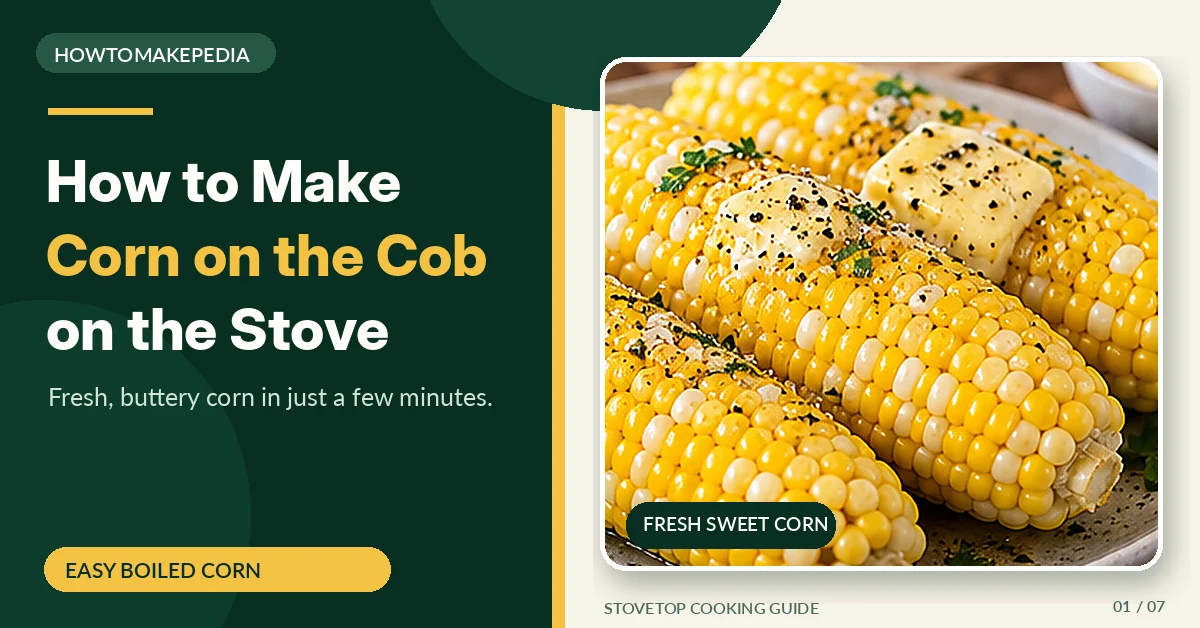

Learning how to make corn on the cob on the stove is easy once you know how long to cook it. Fresh sweet corn usually needs just 3–5 minutes in boiling water to become juicy and tender. Remove the husks and silk, place the ears in a large pot of boiling water, and cook until the kernels are tender with a slight crunch. Finish with butter, salt, and pepper. There’s no need for milk, sugar, or a long cooking time.
Corn on the Cob on the Stove at a Glance
| Recipe Details | Information |
|---|---|
| Recipe | Boiled Corn on the Cob |
| Servings | 4 |
| Prep Time | 5–10 minutes |
| Boil Time | 3–5 minutes |
| Total Time | Approximately 15–25 minutes, including heating the water |
| Cooking Method | Stovetop boiling |
| Main Ingredient | Fresh sweet corn |
| Difficulty | Easy |
Fresh corn cooks quickly, so start checking the kernels after 3 minutes rather than leaving them boiling for a fixed, lengthy period.
Ingredients You Need
You only need a few ingredients to make boiled corn on the cob.
Main Ingredients:
- 4 ears of fresh sweet corn
- Water, enough to cover the corn
For Serving:
- 2 tablespoons butter, melted or softened
- Salt, to taste
- Freshly ground black pepper, to taste
Optional Seasonings:
- Garlic butter
- Chopped parsley
- Chili powder
- Fresh lime juice
- Grated Parmesan cheese
Fresh sweet corn already contains natural sugars, so adding sugar or milk to the boiling water isn’t necessary.
How to Choose Fresh Corn on the Cob
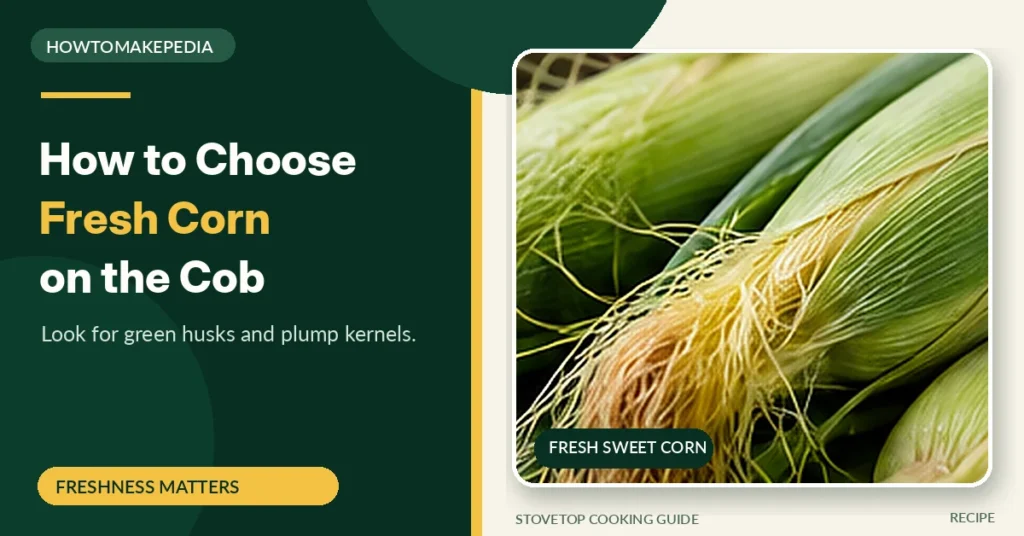
The quality of the corn makes a noticeable difference in its flavor and texture.
When buying fresh corn, look for ears with green husks that fit closely around the cob. The husks should feel fresh rather than dry or brittle.
Choose ears that feel firm and full for their size. The silk near the top should not look moldy or badly deteriorated.
If the kernels are visible, check that they appear plump and well-filled. Avoid ears with noticeably shriveled or damaged kernels.
There’s no need to peel back the husks completely while shopping.
Yellow, white, and bicolor sweet corn all work well for boiling. Kernel color alone doesn’t determine how sweet the corn will taste.
For the best eating quality, keep fresh corn refrigerated in its husks and cook it soon after buying it.
How to Shuck Corn and Remove the Silk
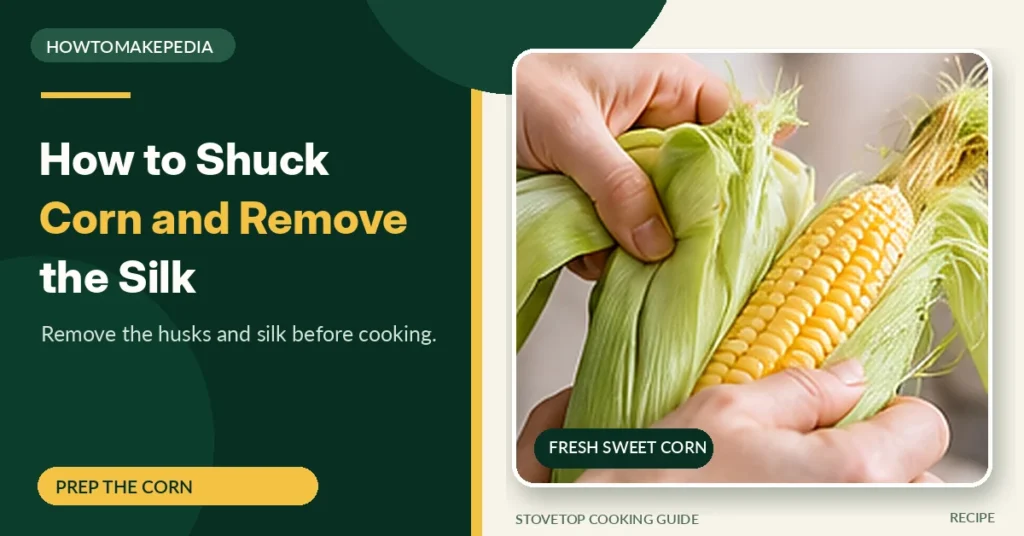
Before boiling corn, remove its husks and the thin strands of silk covering the kernels.
- Hold an ear of corn firmly near the base.
- Grab the husks at the top and pull them downward.
- Remove the husks and any loose leaves.
- Pull away the corn silk with your fingers.
- Rub away stubborn strands using a clean, damp towel or soft vegetable brush.
- Remove any long stem and rinse the corn briefly if needed.
Check around the rows of kernels for remaining silk. A few strands are harmless, but removing them makes the corn more pleasant to eat.
How to Make Corn on the Cob on the Stove
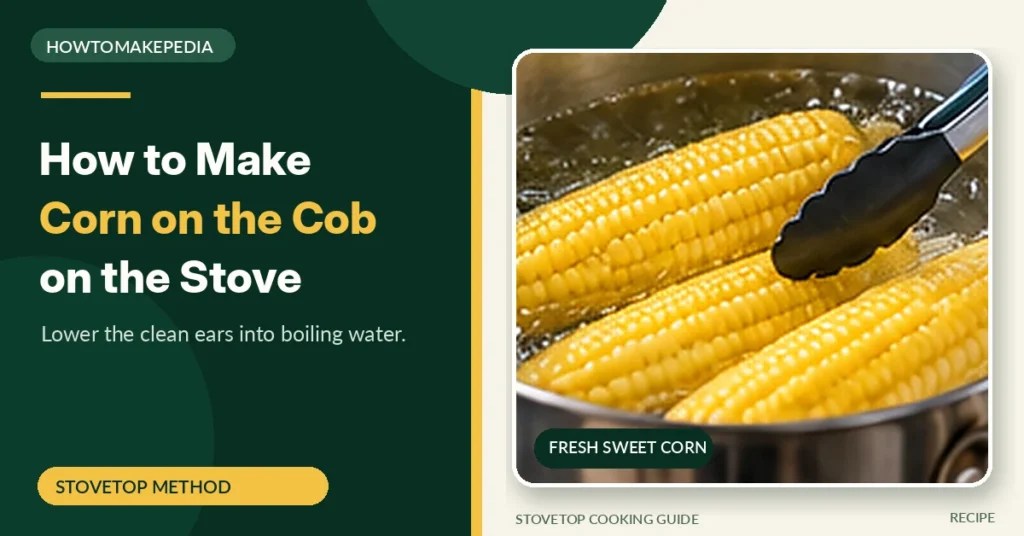
This method works well for fresh yellow, white, or bicolor sweet corn.
Step 1: Choose a Large Pot
Use a pot wide enough to hold four ears of corn comfortably.
The corn should fit without being tightly packed. A larger pot also makes it easier to keep the ears submerged while cooking.
Step 2: Add Water
Pour enough water into the pot to cover the ears once they are added.
Leave space below the rim because the water level will rise when the corn goes in.
Step 3: Bring the Water to a Boil
Place the pot over medium-high or high heat and bring the water to a full boil.
Plain water is sufficient. You can add salt if you prefer, but this recipe uses unsalted water and seasons the corn afterward.
Step 4: Add the Corn
Carefully lower the cleaned corn into the boiling water with kitchen tongs.
Make sure the ears are submerged. If they float, turn them occasionally so they heat evenly.
The water may temporarily stop bubbling when you add the corn. Keep the heat on and allow it to recover.
Step 5: Boil for 3–5 Minutes
Start timing when the ears enter the boiling water.
Most fresh sweet corn becomes tender in approximately 3–5 minutes. You can briefly cover the pot to help the water return to a boil, but watch for boiling over.
Start checking the kernels after about 3 minutes.
Very large or firmer ears may need a little longer.
Step 6: Check for Doneness
Carefully pierce a kernel with the tip of a fork or knife.
The kernel should be hot, plump, and tender without feeling mushy.
You can also taste a small piece after allowing it to cool enough to eat safely.
Step 7: Remove the Corn
Once the kernels are tender, use tongs to lift the ears from the pot.
Allow excess water to drain for a few seconds.
Don’t leave fully cooked corn boiling while you prepare the rest of the meal.
Step 8: Add Butter and Seasonings
Place the corn on a serving plate.
Brush each ear with melted butter and sprinkle with salt and black pepper.
Serve while warm.
How Long Should You Boil Corn on the Cob?
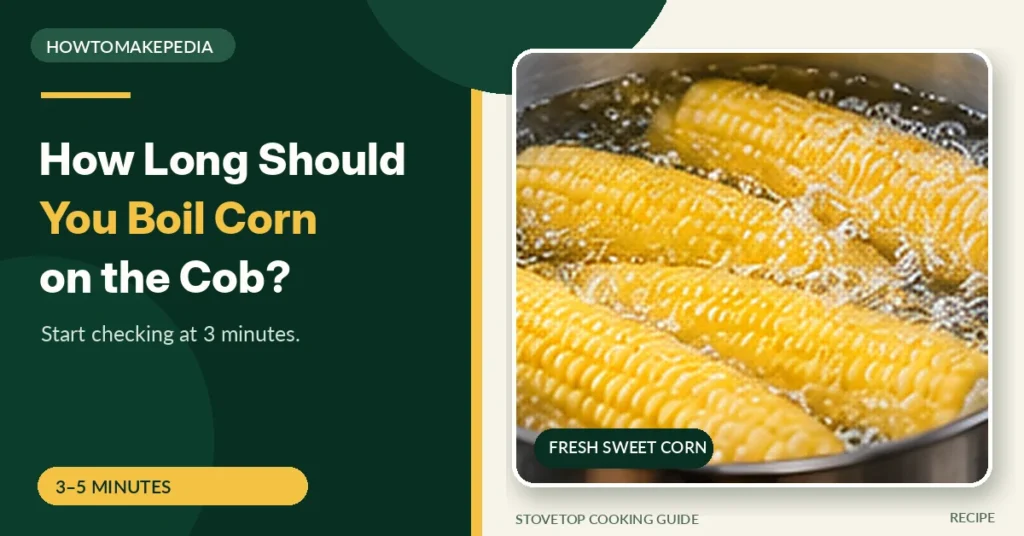
The cooking time depends on the corn’s freshness, size, and texture.
For most fresh sweet corn, 3–5 minutes in already-boiling water is enough.
| Corn Type | Approximate Boiling Time |
|---|---|
| Small, tender fresh corn | 3–4 minutes |
| Average fresh corn | 3–5 minutes |
| Large or firmer fresh corn | 5–7 minutes |
| Frozen corn on the cob | 5–8 minutes |
These times are starting points rather than strict rules.
When should you start the timer?
For this recipe, begin timing as soon as you lower the ears into the boiling water. Check their tenderness at around 3 minutes.
Does corn need to boil for 10 minutes?
Usually not if you’re cooking fresh, tender sweet corn. Older recipes sometimes use longer cooking times, but prolonged boiling can make fresh corn too soft.
The kernels’ texture is more useful than the clock alone.
Should You Salt the Water When Boiling Corn?
There are different opinions about salting corn water.
Some university Extension cooking guides recommend unsalted water because salt may affect kernel firmness. However, other respected cooking sources, including Food Network Kitchen, recommend boiling corn in salted water.
This means the claim that salt always makes corn tough shouldn’t be treated as a universal rule.
For this recipe, use plain water and add salt after cooking.
Seasoning afterward also allows each person to control how salty their corn tastes.
Should You Add Sugar, Milk, or Butter to the Water?
You may have seen recipes that add sugar, milk, or butter directly to the pot. These ingredients are optional.
Sugar
Sweet corn contains natural sugars. A little sugar in the cooking water may contribute sweetness, but it won’t make older corn taste exactly like freshly harvested corn.
Choose fresh sweet corn rather than relying on sugar to improve its flavor.
Milk
Some corn recipes use a mixture of water, milk, butter, and sugar. This creates a richer cooking liquid.
However, milk isn’t required to cook tender corn. Plain water also avoids the risk of milk scorching or foaming over.
Butter
Butter is easier to distribute over the corn after cooking.
Instead of adding it to a large pot of water, brush melted butter directly onto the warm kernels.
How Do You Know When Corn on the Cob Is Done?
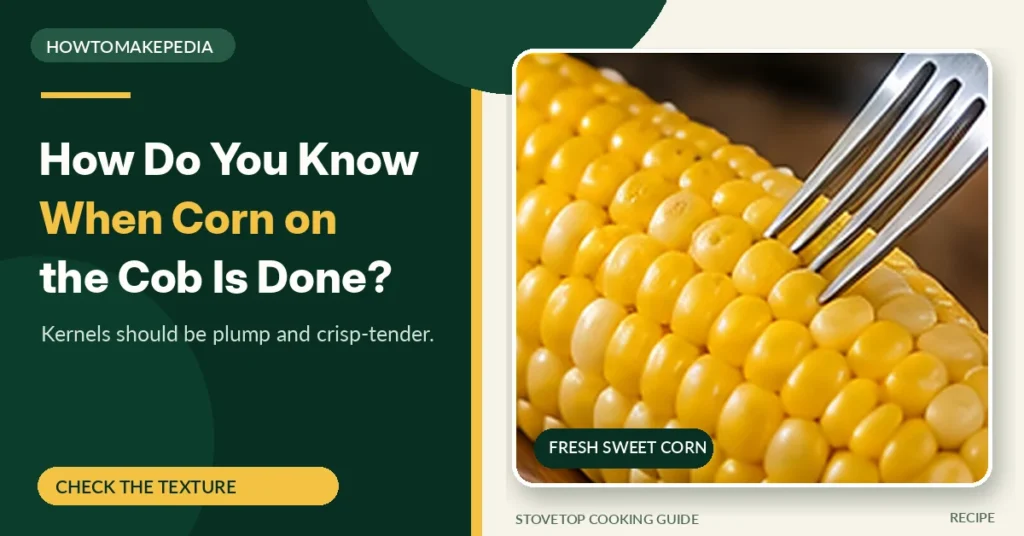
Check the kernels rather than relying on their color.
Cooked sweet corn should have these characteristics:
- The kernels look plump and full.
- The corn is hot throughout.
- A kernel yields easily when pierced.
- The texture is tender with a slight crisp bite.
- The kernels aren’t mushy or shriveled.
Some recipes suggest boiling corn until it turns bright yellow. This doesn’t work as a general rule because sweet corn also comes in white and bicolor varieties.
If the kernels are still too firm, continue cooking briefly and check again.
Can You Overcook Corn on the Cob?
Yes. Fresh sweet corn can lose its pleasant texture when boiled for too long.
Overcooked kernels may become excessively soft, watery, or chewy.
The easiest way to avoid this is to start checking after 3 minutes and remove the ears once they are tender.
Don’t automatically leave fresh corn boiling for 15–20 minutes.
Can cooked corn sit in hot water?
If dinner isn’t ready, you can turn off the heat and leave the corn in the hot water for a few minutes.
However, its texture may continue changing as it sits. For the best results, remove the ears soon after they finish cooking.
If you need to hold cooked corn for an extended period, keep it at a food-safe hot-holding temperature of at least 140°F (60°C), rather than leaving it in water that gradually cools.
How Many Ears of Corn Can You Boil at Once?
Four average ears usually fit comfortably in a large pot.
If you’re preparing corn for a larger family gathering, use a bigger stockpot or cook several batches.
The important thing is to leave enough room for the water to circulate around the ears.
Avoid squeezing eight or ten ears into a small saucepan.
You can also break fresh ears into halves if your pot is small or you want smaller servings.
How to Boil Frozen Corn on the Cob
Frozen corn is useful when fresh corn isn’t available.
You can usually cook frozen corn directly from the freezer without thawing it.
- Bring a large pot of water to a boil.
- Carefully add the frozen ears.
- Keep them submerged as the water returns to temperature.
- Boil for approximately 5–8 minutes, checking the package directions when available.
- Remove once the kernels are hot throughout and tender.
- Drain and season with butter, salt, and pepper.
Frozen ears generally need more time than fresh ears because they lower the water temperature and must heat through from frozen.
Avoid thawing corn at room temperature for long periods.
Fresh Corn vs. Frozen Corn
| Feature | Fresh Corn | Frozen Corn |
|---|---|---|
| Boiling time | About 3–5 minutes | About 5–8 minutes |
| Preparation | Remove husks and silk | Usually ready to cook |
| Texture | Crisp-tender when fresh | May be slightly softer |
| Availability | Seasonal | Available year-round |
| Storage | Refrigerate and use promptly | Keep frozen until needed |
Fresh corn is a good choice when it’s in season, but frozen corn can also make a convenient side dish.
Why Is My Boiled Corn Tough or Mushy?
If your corn doesn’t turn out as expected, the problem may be the quality of the ears or the cooking time.
| Problem | Possible Cause | What to Do |
|---|---|---|
| Corn is tough | Older or more mature ears | Choose fresher sweet corn |
| Corn is mushy | Cooked too long | Reduce the boiling time |
| Corn isn’t sweet | Age, variety, or storage conditions | Buy fresher corn and refrigerate it promptly |
| Water stops boiling | The corn cools the water | Continue heating and check for tenderness |
| Corn cooks unevenly | Pot is overcrowded | Use a larger pot or smaller batches |
| Frozen corn is still cold | Insufficient heating | Continue cooking briefly until heated through |
A common mistake is trying to fix older corn by boiling it longer. Extra cooking can soften firm kernels, but it cannot restore the flavor and texture of very fresh sweet corn.
Easy Butter and Seasoning Ideas
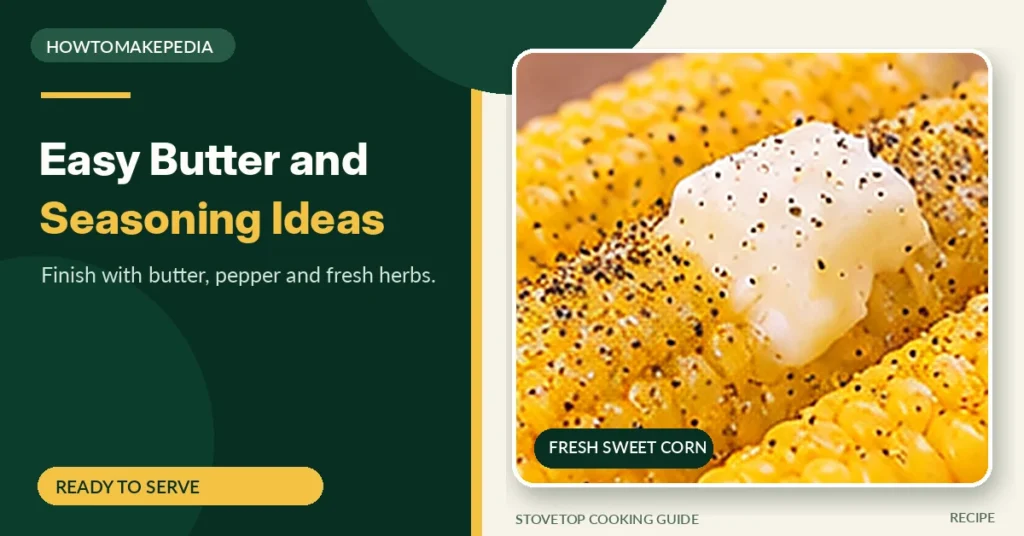
Plain buttered corn is a familiar side dish, but you can change the flavor with a few additions.
Classic Butter and Pepper
Brush the cooked corn with melted butter, then add salt and freshly ground black pepper.
Garlic Butter Corn
Mix softened butter with finely minced garlic and chopped parsley. Spread it over the hot corn.
For a milder garlic flavor, use cooked garlic rather than raw.
Chili Lime Corn
Brush the corn with butter and sprinkle lightly with chili powder. Finish with freshly squeezed lime juice.
Parmesan Corn
Add melted butter, finely grated Parmesan, and black pepper.
Herb Butter Corn
Mix softened butter with chopped chives, parsley, or basil before spreading it over the corn.
Add these seasonings after cooking so they stay on the kernels.
Stovetop Corn vs. Oven and Air Fryer Corn
Boiling isn’t the only way to cook corn on the cob. The best method depends on how many ears you’re preparing and the flavor you want.
| Cooking Method | Best For | Result |
|---|---|---|
| Stovetop boiling | Quick cooking | Juicy, tender kernels without browning |
| Oven | Larger batches | Roasted flavor, depending on preparation |
| Air fryer | Small batches | Lightly roasted exterior |
| Steaming | Cooking with less water | Tender kernels |
Boiling works well when you want a straightforward side dish without turning on the oven.
Steaming is another good choice, although its cooking time and technique differ from direct boiling.
How to Store Leftover Corn on the Cob
Cooked corn should be refrigerated promptly.
Place leftover ears in shallow, covered containers or wrap them securely to prevent drying.
According to USDA food-safety guidance:
- Refrigerate cooked leftovers within 2 hours.
- If the surrounding temperature is above 90°F (32°C), refrigerate within 1 hour.
- Keep refrigerated food at 40°F (4°C) or below.
- Use most cooked leftovers within 3–4 days.
Don’t leave cooked corn sitting on the counter overnight.
If you won’t eat the leftovers within a few days, freeze them in suitable airtight packaging.
Freezing may change the kernel texture, but the corn can still be used in soups, casseroles, and other cooked dishes.
How to Reheat Corn on the Cob
You can reheat leftover corn using the microwave, stovetop, or oven.
Microwave Method
Place the corn in a microwave-safe dish and cover it with a damp paper towel or vented microwave-safe lid.
Heat in short intervals, turning the ear to help it warm evenly.
Stovetop Method
Bring a pot of water to a boil, then reduce the heat and add the cooked corn.
Warm it briefly, checking that it heats throughout. Avoid boiling it unnecessarily for another full cooking cycle.
Oven Method
Wrap the corn in foil with a small amount of water or butter to help retain moisture.
Place it in a preheated oven and heat until thoroughly warmed.
For food safety, USDA recommends reheating leftovers to 165°F (74°C).
Common Mistakes When Boiling Corn on the Cob
A few mistakes can affect the flavor and texture of boiled corn.
Using old corn: Dry husks and shriveled kernels can indicate declining quality. Start with fresh ears whenever possible.
Not removing the silk: Strands left between the kernels make the corn less pleasant to eat. Remove as much as you can before cooking.
Using a small pot: Crowded ears may cook unevenly. Choose a pot with enough room to submerge them.
Boiling too long: Fresh sweet corn often needs only a few minutes. Start checking at 3 minutes.
Using color as the only test: White sweet corn won’t turn yellow when cooked. Check tenderness instead.
Adding unnecessary ingredients: Sugar, milk, and butter aren’t required in the boiling water.
Using fresh-corn timing for frozen corn: Frozen ears generally need a longer cooking time.
Leaving cooked corn in boiling water: Remove finished ears promptly to preserve their texture.
Easy Stovetop Corn on the Cob Recipe
Recipe Details
- Course: Side Dish
- Cuisine: American
- Servings: 4
- Prep Time: 5–10 minutes
- Boiling Time: 3–5 minutes
- Total Time: Approximately 15–25 minutes, depending on how long the water takes to boil
Ingredients
- 4 ears fresh sweet corn, husks and silk removed
- Water, enough to submerge the ears
- 2 tablespoons butter
- Salt, to taste
- Black pepper, to taste
Instructions
- Fill a large pot with enough water to cover the corn.
- Bring the water to a full boil over medium-high or high heat.
- Carefully lower the shucked corn into the water using tongs.
- Keep the ears submerged without overcrowding the pot.
- Start checking the kernels after approximately 3 minutes.
- Continue boiling until the corn is hot and crisp-tender, usually 3–5 minutes.
- Remove the ears with tongs and drain briefly.
- Brush the hot corn with butter.
- Sprinkle with salt and black pepper.
- Serve warm.
Recipe Notes
- Frozen corn generally takes approximately 5–8 minutes.
- Larger or firmer ears may need additional time.
- Plain water works well; sugar and milk are optional.
- Seasoning the corn after cooking is convenient and gives you more control over the flavor.
- Remove the corn as soon as the kernels reach your preferred tenderness.
Frequently Asked Questions
How long do you boil corn on the cob?
Most fresh sweet corn needs approximately 3–5 minutes in already-boiling water. Start checking after 3 minutes and remove the ears when the kernels are hot and crisp-tender. Larger or firmer ears may require a little more time.
Do you put corn in boiling water or cold water?
For this recipe, add the shucked corn to water that is already boiling. This makes the cooking time easier to follow. Other cooking methods exist, but starting with boiling water works well for fresh sweet corn.
Should you cover corn while boiling?
Covering the pot is optional. A lid helps the water return to temperature after the corn is added, but the corn can also cook uncovered. If you use a lid, watch the pot and adjust the heat to prevent boiling over.
Should you add salt when boiling corn on the cob?
You can boil corn in salted or unsalted water. Cooking recommendations differ, and salted water doesn’t automatically ruin the kernels. This recipe uses plain water and adds salt after cooking for easy seasoning.
Does adding sugar make boiled corn sweeter?
Sugar can add sweetness to a preparation, but fresh sweet corn generally doesn’t need it. Corn variety and freshness have a greater influence on the natural flavor. Sugar also won’t restore the full quality of older corn.
Do you need milk to boil corn on the cob?
No. Milk is an optional ingredient used in some richer corn recipes. Plain boiling water is enough to cook sweet corn until tender. Butter and other seasonings can be added afterward.
How do you know when corn on the cob is fully cooked?
The kernels should be hot, plump, and tender when pierced or bitten. They should still have a slight crispness rather than feeling mushy. Don’t use yellow color alone as your guide because sweet corn can also be white or bicolor.
Can you overcook corn on the cob?
Yes. Boiling fresh corn for too long can make the kernels overly soft or chewy. Start checking around 3 minutes, and remove the ears once they’re tender. Fresh corn generally doesn’t need 15–20 minutes of active boiling.
Can you boil frozen corn without thawing it first?
Yes. Place frozen corn directly into boiling water and cook for approximately 5–8 minutes, or follow the package instructions. Check that the kernels are hot throughout and tender before serving.
How long can cooked corn stay in the refrigerator?
Properly refrigerated cooked corn should generally be used within 3–4 days. Store it in an airtight container or wrap it securely, and keep the refrigerator at 40°F (4°C) or below. Refrigerate it within the recommended food-safety time limits.
Conclusion
Making corn on the cob on the stove doesn’t require much preparation. Start with fresh sweet corn, remove the husks and silk, and add the ears to a large pot of boiling water. Begin checking after 3 minutes; most fresh ears will be tender within 3–5 minutes. Remove them promptly and finish with butter, salt, and pepper. There’s no need to add sugar or milk to the water. Paying attention to freshness and cooking time makes a bigger difference than adding extra ingredients.
