
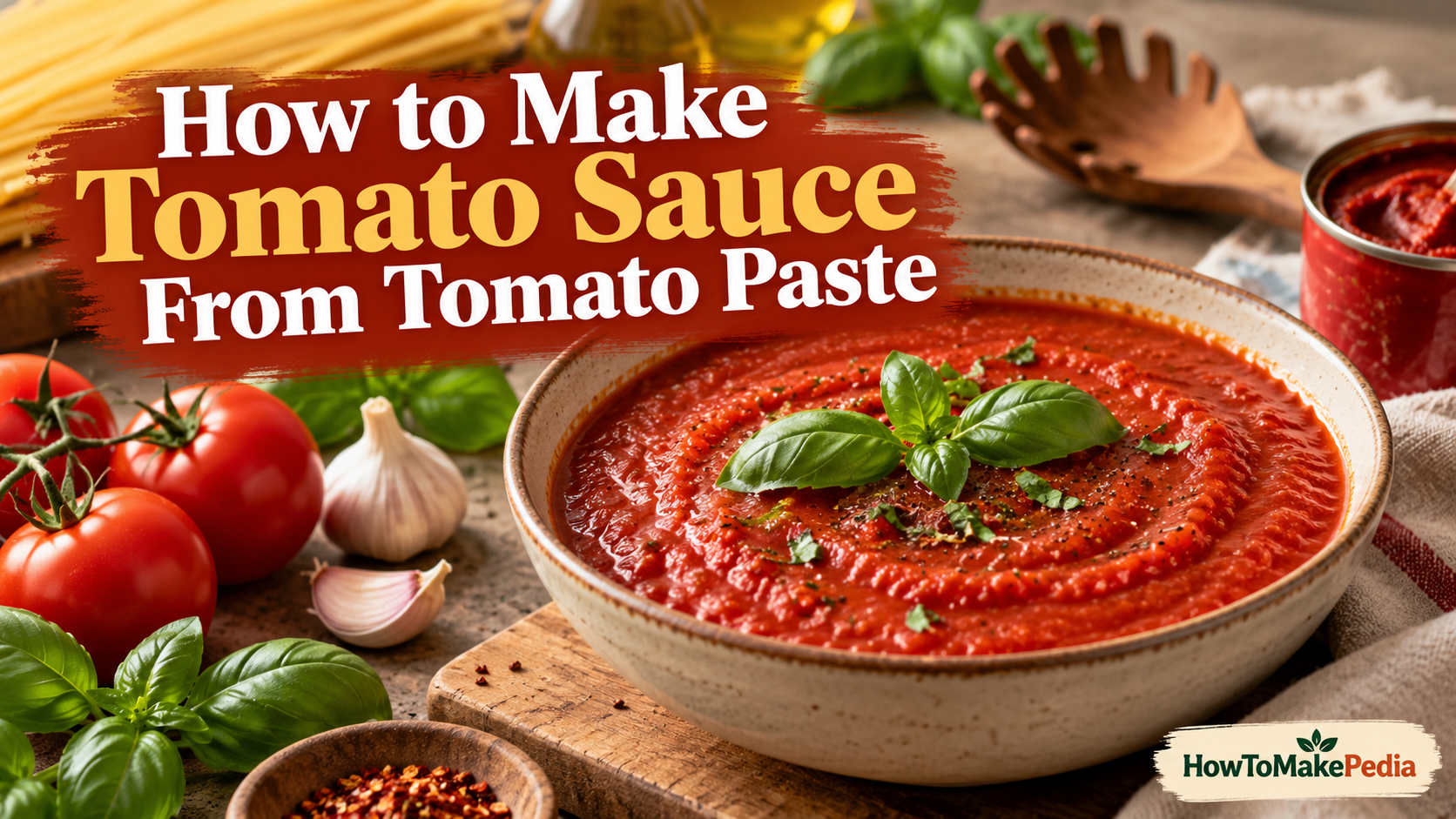

You can make tomato sauce from tomato paste by mixing the paste with water until it reaches a smooth, pourable consistency. For a quick substitute, start with equal parts tomato paste and water. If you’re making pasta sauce, add olive oil, garlic, and herbs, then simmer everything for about 10–12 minutes.
The result is a smooth, rich tomato sauce made without canned tomatoes or a jar of pasta sauce. You can keep it simple for soups and casseroles or season it for spaghetti, lasagna, and other pasta dishes.
This guide covers both methods, including how much water to add, how to fix the consistency, and how to make the sauce taste less like concentrated tomato paste.
Quick Answer: How to Turn Tomato Paste Into Tomato Sauce
If you need a quick tomato sauce substitute, you only need two ingredients:
- 1/4 cup tomato paste
- 1/4 cup water, plus more as needed
Instructions:
- Put the tomato paste in a small bowl or saucepan.
- Add the water a little at a time.
- Whisk until the mixture is smooth and free of lumps.
- Add more water if you need a thinner sauce.
- Season with a little salt or use the mixture directly in a recipe that will be cooked.
This makes approximately 1/2 cup of thick tomato sauce substitute before any additional water is added.
For something closer to the consistency of canned tomato sauce, try 1/3 cup tomato paste mixed with 2/3 cup water. This makes approximately 1 cup of a more pourable substitute.
The quick mixture works especially well when tomato sauce is another ingredient in a cooked dish. For pasta, the seasoned recipe below will have a more balanced flavor.
Tomato Paste to Water Ratio
Tomato paste is much thicker than regular tomato sauce because much of its water has been removed during processing.
Adding water loosens the paste, but the amount you need depends on what you’re cooking.
| Purpose | Starting ratio (paste : water) | Result |
|---|---|---|
| Thick sauce substitute | 1:1 | Rich and concentrated |
| General cooking sauce | 1:2 | Smoother and more pourable |
| Seasoned pasta sauce | About 1:2 to 1:2½ | Suitable for simmering with garlic and herbs |
| Thinner sauce base | 1:3 | Lighter consistency for dishes with other ingredients |
These ratios are starting points, not exact formulas. Different tomato paste products have different concentrations, and cooking changes the final thickness.
Basic Sauce Substitute
For a quick substitute, equal parts tomato paste and water give you control over the consistency.
Start there, then add more water if the mixture still looks too thick for your recipe.
Rich Pasta Sauce
For pasta, use a 6-ounce can of regular tomato paste with 1½ cups of water, olive oil, garlic, and dried herbs.
Simmer the mixture gently so the garlic and seasonings can flavor the sauce. Adjust the liquid near the end of cooking rather than adding large amounts of water all at once.
Adjusting Sauce Thickness
A good tomato sauce should be thick enough to coat a spoon but loose enough to pour.
- For a thicker sauce: Simmer it uncovered, stirring frequently.
- For a thinner sauce: Add water one tablespoon at a time.
- For pasta: Keep the sauce slightly loose because cooked pasta absorbs some liquid.
- For pizza: Reduce the liquid until the sauce spreads easily without running off the dough.
Remember that a 6-ounce can of tomato paste is measured by weight. It contains roughly 2/3 cup of paste by volume, although the amount varies slightly by product.
Ingredients You’ll Need

This recipe uses one standard 6-ounce can of tomato paste and makes approximately 1¾–2 cups of seasoned sauce, depending on how much moisture evaporates.
Main Ingredients
| Ingredient | Amount | Why it’s included |
|---|---|---|
| Tomato paste | 1 can (6 oz / 170 g) | Creates the tomato base |
| Water | 1½ cups (355 mL), plus more if needed | Dilutes the concentrated paste |
| Olive oil | 1 tablespoon | Helps cook the garlic and adds richness |
| Garlic | 2 cloves, minced | Adds savory flavor |
| Dried oregano | ¾ teaspoon | Provides Italian-style seasoning |
| Dried basil | ¼ teaspoon | Adds herbal flavor |
| Salt | ¼ teaspoon to start | Balances the tomato flavor |
| Black pepper | ⅛ teaspoon | Adds mild warmth |
Optional Ingredients
- Sugar: A small pinch, about ⅛ teaspoon, if the finished sauce tastes especially sharp.
- Butter: 1 teaspoon stirred in after cooking for a richer finish.
- Red pepper flakes: A pinch for a spicy version.
- Fresh basil: A few torn leaves added before serving.
Use ordinary canned tomato paste for the listed quantities. Double-concentrated paste may need a different amount of water or paste; check the package and adjust gradually rather than assuming the same ratio will work.
Equipment
You’ll need a medium saucepan, wooden spoon or silicone spatula, measuring cups, measuring spoons, and a whisk.
A heavy-bottomed saucepan is useful because thick tomato mixtures can stick or scorch if the heat is too high.
How to Make Tomato Sauce From Tomato Paste
Prep time: 5 minutes
Cook time: Approximately 15 minutes
Total time: Approximately 20 minutes
Servings: 4 modest portions
Step 1: Prepare the Ingredients
Measure the tomato paste, water, olive oil, and dried herbs before turning on the heat.
Mince the garlic finely so it spreads evenly through the sauce.
Keep the measured water nearby. You’ll use some of it to loosen the tomato paste before adding the rest.
Step 2: Sauté the Garlic
Place a medium saucepan over medium-low heat and add 1 tablespoon of olive oil.
When the oil is warm, add the minced garlic.
Stir for about 30–45 seconds, just until fragrant. The garlic should remain pale rather than turning dark brown.
Garlic burns quickly, and burnt garlic can make the entire sauce taste bitter. Lower the heat immediately if it starts browning too fast.
Step 3: Cook the Tomato Paste

Add the 6-ounce can of tomato paste to the saucepan.
Stir the paste into the garlic and olive oil for approximately 1 minute. It may become slightly darker and smell more savory as it warms.
Keep the heat at medium-low and move the paste around the pan continuously.
The goal is to warm the concentrated tomato paste and develop its flavor without burning it.
If the paste begins sticking or darkening rapidly, reduce the heat and move on to adding water.
Step 4: Add Water Gradually

Pour about ¼ cup of the measured water into the saucepan.
Whisk or stir until the thick tomato paste loosens into a smooth mixture.
Continue adding the remaining water in several additions until you’ve used the full 1½ cups.
Adding the first bit of water slowly makes it easier to break up the paste without leaving stubborn lumps.
The mixture will look thinner than finished pasta sauce at this stage. It will thicken somewhat as it simmers.
Step 5: Add the Seasonings
Stir in:
- ¾ teaspoon dried oregano
- ¼ teaspoon dried basil
- ¼ teaspoon salt
- ⅛ teaspoon black pepper
Mix well.
If your tomato paste already contains added salt or seasonings, start with less salt and adjust after cooking.
Hold off on adding sugar until you have tasted the simmered sauce. Some tomato pastes are naturally sweeter than others.
Step 6: Simmer and Adjust the Consistency

Increase the heat briefly until the sauce begins bubbling gently, then reduce it to low.
Simmer uncovered for 10–12 minutes, stirring every couple of minutes.
The sauce should bubble slowly rather than boil vigorously.
As it cooks, it will become smoother and slightly thicker. You should be able to draw a spoon through the saucepan without finding thick clumps of undiluted paste.
If the sauce gets too thick, add water one tablespoon at a time.
If it looks watery, simmer uncovered for another few minutes, keeping the heat low and stirring regularly.
Step 7: Taste and Serve
Taste a small spoonful after the sauce has simmered.
Adjust the salt, pepper, or herbs if needed.
If the sauce tastes sharper than you’d like, try a small pinch of sugar or stir in the optional teaspoon of butter. Neither is necessary if the sauce already tastes balanced.
For pasta, add the cooked noodles directly to the saucepan and toss until coated.
Serve while hot.
How to Make Tomato Sauce From Tomato Paste for Pasta

Tomato paste makes a convenient pasta sauce when you’re out of canned tomatoes or bottled marinara.
The biggest difference between sauce intended for cooking and sauce intended for pasta is the texture.
Pasta sauce needs enough liquid to spread evenly over the noodles. If it’s too thick, the sauce sits in sticky patches. If it’s too thin, much of it collects at the bottom of the bowl.
How to Use the Sauce With Spaghetti
For a practical starting point, use this batch of sauce with about 8 ounces (225 g) of dry spaghetti or another pasta shape.
- Cook the pasta in salted water according to the package directions.
- Before draining, reserve about ½ cup of pasta cooking water.
- Prepare the tomato paste sauce in a separate saucepan.
- Add the drained pasta directly to the sauce.
- Toss over low heat for 30–60 seconds.
- Add a tablespoon or two of reserved pasta water if the sauce needs loosening.
You don’t need to use all the reserved water.
The starch in pasta water can help the sauce cling to the noodles, but adding too much will dilute the tomato flavor.
If you’re using more pasta or prefer heavily sauced noodles, increase the sauce recipe rather than stretching it with excessive water.
Making the Sauce Taste More Like Marinara
A few adjustments can make the flavor more suitable for spaghetti:
- Use fresh basil at the end of cooking.
- Add a little more garlic if you enjoy a stronger garlic flavor.
- Include a pinch of red pepper flakes for heat.
- Finish with olive oil or a small amount of butter.
- Simmer long enough to combine the seasonings without scorching the paste.
This creates a quick marinara-style sauce. It won’t taste identical to marinara made from whole or crushed tomatoes because tomato paste has a more concentrated, cooked flavor.
Tomato Paste to Tomato Sauce Conversion Chart
Wondering how much tomato paste you need to make tomato sauce?
Use the following chart as a starting guide.
| Tomato paste | Water | Approximate mixture before cooking |
|---|---|---|
| 2 tablespoons | 2 tablespoons | ¼ cup, thick |
| ¼ cup | ¼ cup | ½ cup, thick |
| ⅓ cup | ⅔ cup | About 1 cup, pourable |
| 1 standard 6-oz can | ⅔ cup | About 1⅓ cups, thick |
| 1 standard 6-oz can | 1 cup | About 1⅔ cups, thicker sauce |
| 1 standard 6-oz can | 1½ cups | A little over 2 cups before simmering |
| 1 standard 6-oz can | 2 cups | About 2⅔ cups, thinner sauce |
Important: These are approximate starting volumes, not measured finished yields. Cooking, added oil, and evaporation affect the final amount.
For most recipes that use canned tomato sauce as one ingredient, the 1:2 paste-to-water mixture is a reasonable place to start.
For dishes requiring precise amounts of liquid, measure the prepared substitute before adding it to the recipe.
Tips for Better Homemade Tomato Sauce
Use Moderate Heat
Tomato paste contains little moisture, so it can burn before you realize what’s happening.
Medium-low heat is generally enough for cooking the garlic and warming the paste.
Add Water in Stages
Whisking a small amount of water into the paste first helps prevent lumps.
Once the mixture is smooth, adding the rest of the water becomes much easier.
Taste After Simmering
Concentrated tomato paste may taste sharp before the water and seasonings have combined.
Taste the sauce near the end of cooking before deciding whether it needs extra salt or sugar.
Avoid Overseasoning Too Early
A sauce may become saltier as it reduces.
Start with a moderate amount of seasoning, then adjust after the sauce reaches its final consistency.
Check the Tomato Paste Label
Regular tomato paste, salted tomato paste, and double-concentrated tomato paste are not necessarily interchangeable in equal amounts.
A thicker or more concentrated product may require additional adjustment to achieve the flavor and texture you want.
Common Mistakes and Troubleshooting
| Problem | Likely cause | How to fix it |
|---|---|---|
| Sauce is too thick | Not enough water or too much evaporation | Stir in water one tablespoon at a time |
| Sauce is too watery | Too much water or insufficient reduction | Simmer uncovered for a few more minutes |
| Sauce tastes too acidic | Concentrated tomato flavor or unbalanced seasoning | Check salt, simmer gently, and try a tiny pinch of sugar if needed |
| Sauce tastes bitter or burnt | Scorched garlic or tomato paste | Start again if the burnt flavor is strong; badly scorched sauce usually cannot be rescued |
| Sauce contains lumps | Water was added before the paste was loosened | Whisk thoroughly or briefly blend the sauce until smooth |
| Sauce tastes bland | Too little seasoning or flavor development | Add a little salt, garlic, herbs, or olive oil |
| Sauce is too salty | Too much salt or salty broth | Dilute with an unsalted tomato paste-and-water mixture |
| Sauce sticks to the pan | Heat is too high or mixture is too thick | Lower the heat, stir frequently, and add a little water before scorching occurs |
If the sauce has burnt on the bottom, avoid scraping the dark, scorched layer into the remaining sauce. Transfer the unburnt portion carefully to a clean saucepan only if it still tastes acceptable.
Tomato Sauce Variations and Substitutions
The basic recipe is flexible. These are optional adjustments rather than separately kitchen-tested recipes.
1. Tomato Paste and Water Only
Mix tomato paste with water for a simple substitute that works in soups, casseroles, and other cooked dishes.
Start with equal parts and thin as needed.
2. Garlic and Basil Pasta Sauce
Prepare the main recipe and add a small handful of torn fresh basil during the final minute of cooking.
For a stronger garlic flavor, add one extra minced clove, taking care not to burn it.
3. Italian Herb Tomato Sauce
Add a pinch of dried thyme or rosemary alongside the oregano and basil.
Use rosemary sparingly because its flavor can dominate a small batch of sauce.
4. Spicy Tomato Sauce
Add approximately ⅛ teaspoon of crushed red pepper flakes while sautéing the garlic.
Increase gradually if you prefer more heat.
5. Tomato Sauce Without Onion
The main recipe contains no onion, so no substitutions are needed.
You can add onion if you want a sweeter, more aromatic sauce, but allow extra cooking time to soften it before adding the garlic.
6. Dairy-Free Tomato Sauce
Use olive oil and omit the optional butter.
The main sauce ingredients are already plant-based.
7. Thicker Pizza-Style Sauce
Begin with less water than the pasta version, roughly 1 cup for a 6-ounce can of paste.
Season lightly with garlic and oregano.
Simmer until the sauce is spreadable but not runny. Let it cool slightly before spreading it over pizza dough.
How to Store and Freeze Tomato Sauce
Homemade tomato sauce can be refrigerated or frozen, but it should be handled like other cooked leftovers.
Refrigerating
Allow the sauce to cool quickly in shallow containers and refrigerate it within two hours of cooking.
Keep the refrigerator at 40°F (4°C) or colder.
Transfer the sauce to a clean, airtight container and use it within 3–4 days.
If the room temperature is above 90°F (32°C), refrigerate the sauce within one hour.
Freezing
Divide leftover sauce into portions using freezer-safe containers.
Leave some empty space at the top because liquid expands when frozen.
Label each container with the freezing date.
For good quality, aim to use the sauce within approximately 2–3 months. Food kept continuously frozen at 0°F (-18°C) remains safe longer, although its quality can decline.
Thawing and Reheating
Thaw frozen sauce in the refrigerator rather than leaving it on the countertop.
Reheat the sauce in a saucepan, stirring frequently, and bring it to a boil. Leftovers should reach at least 165°F (74°C) when reheated.
Add a splash of water if the sauce becomes too thick during reheating.
Food-safety reference: USDA Food Safety and Inspection Service guidance on safe handling of leftovers and safe reheating methods.
Frequently Asked Questions
Can you make tomato sauce from tomato paste?
Yes. Tomato paste can be diluted with water to create a smooth tomato sauce substitute. For a more flavorful pasta sauce, cook it with garlic, olive oil, herbs, and seasonings.
How much water should I add to tomato paste?
Start with equal parts tomato paste and water if you want a thick substitute. For a thinner, more pourable sauce, try about two parts water to one part paste. Adjust according to the recipe and the concentration of your tomato paste.
How much tomato paste do I need to make 1 cup of tomato sauce?
Approximately ⅓ cup tomato paste mixed with ⅔ cup water gives you about 1 cup of a pourable tomato sauce substitute before cooking. Adjust the consistency as needed.
Can tomato paste replace canned tomato sauce?
Yes, particularly in cooked recipes such as soups, casseroles, chili, and pasta dishes. However, the flavor and consistency may differ from canned tomato sauce, so adjust the added water and seasoning.
Can I make tomato sauce using only tomato paste and water?
Yes. The two-ingredient version is useful when you need tomato sauce for another recipe. For serving directly over pasta, garlic, oil, and herbs usually give it a more complete flavor.
Can I use this sauce for spaghetti?
Yes. Toss the prepared sauce with cooked spaghetti over low heat. Use small amounts of reserved pasta water if the sauce becomes too thick.
Why does my tomato paste sauce taste too acidic?
Tomato paste has concentrated tomato flavor, which can taste sharp. First check the balance of salt and seasoning. A gentle simmer or a small amount of butter may round out the flavor. Add only a tiny pinch of sugar if needed.
Can I use vegetable or chicken broth instead of water?
Yes. Broth adds extra savory flavor, but it can also introduce salt and change the final taste. Unsalted or low-sodium broth is easier to control.
Can I use double-concentrated tomato paste?
Yes, but don’t automatically use the same quantities as ordinary paste. Start with less paste or adjust the water according to the label and your preferred tomato flavor.
Can I freeze homemade tomato sauce?
Yes. Freeze cooled sauce in suitable containers, leaving room for expansion. For best quality, aim to use it within 2–3 months, and thaw safely before reheating.
Printable Tomato Sauce From Tomato Paste Recipe
Recipe Name: Easy Tomato Sauce From Tomato Paste
Description: A quick, smooth tomato sauce made from a can of tomato paste, water, olive oil, garlic, and dried Italian herbs. Suitable for spaghetti, other pasta dishes, and everyday cooking.
Recipe Category: Sauce / Condiment
Cuisine: Italian-inspired
Preparation Time: 5 minutes
Cooking Time: Approximately 15 minutes
Total Time: Approximately 20 minutes
Estimated Yield: 1¾–2 cups sauce
Servings: 4 modest servings
Ingredients
- 1 can (6 oz / 170 g) regular tomato paste
- 1½ cups (355 mL) water, plus more if needed
- 1 tablespoon olive oil
- 2 garlic cloves, minced
- ¾ teaspoon dried oregano
- ¼ teaspoon dried basil
- ¼ teaspoon salt, or to taste
- ⅛ teaspoon ground black pepper
- Optional: ⅛ teaspoon sugar, if needed
- Optional: 1 teaspoon butter
Equipment
- Medium saucepan
- Measuring cups and spoons
- Whisk
- Wooden spoon or silicone spatula
Instructions
- Prepare the ingredients. Mince the garlic and measure the tomato paste, water, oil, and seasonings.
- Cook the garlic. Heat olive oil in a saucepan over medium-low heat. Add the garlic and stir for 30–45 seconds until fragrant without browning.
- Warm the tomato paste. Stir in the tomato paste and cook for approximately 1 minute, stirring continuously.
- Add the water. Whisk in about ¼ cup of the measured water to loosen the paste. Gradually add the remaining water until smooth.
- Season the sauce. Add oregano, basil, salt, and pepper. Stir to combine.
- Simmer gently. Bring to a gentle simmer, reduce the heat to low, and cook uncovered for 10–12 minutes, stirring regularly.
- Adjust and serve. Add a little water if the sauce is too thick, or simmer briefly if too thin. Taste and adjust seasoning. Stir in optional butter or a tiny pinch of sugar only if needed.
Recipe Notes
- One 6-ounce can of tomato paste is approximately ⅔ cup by volume.
- The sauce is thicker than many canned tomato sauces unless extra water is added.
- For pasta, combine this batch with approximately 8 ounces (225 g) of dry pasta, cooked according to the package instructions.
- For a thinner sauce, add water gradually.
- For dairy-free preparation, omit butter.
- The final yield depends on evaporation and should be confirmed during a real kitchen test.
Storage
Refrigerate in a clean, airtight container for 3–4 days at 40°F (4°C) or colder. Freeze in suitable containers for longer storage, preferably using within 2–3 months for best quality.
Useful Substitutions
- Replace water with low-sodium vegetable broth for more savory flavor.
- Replace dried basil with a little fresh basil added near the end.
- Omit the garlic for a plainer tomato sauce base.
- Omit butter for a dairy-free version.
Nutrition note: Nutrition values are not included because ingredient brands, optional additions, and final yield affect the calculation.
Final Thoughts
Making tomato sauce from tomato paste is a useful way to turn a pantry staple into a quick cooking sauce.
For a basic substitute, mix tomato paste with water until it reaches the consistency your recipe needs. For pasta, cooking the paste with olive oil, garlic, herbs, and water creates a more flavorful sauce.
Start with a manageable amount of water, taste before making major seasoning adjustments, and keep the heat gentle while the sauce simmers.
