
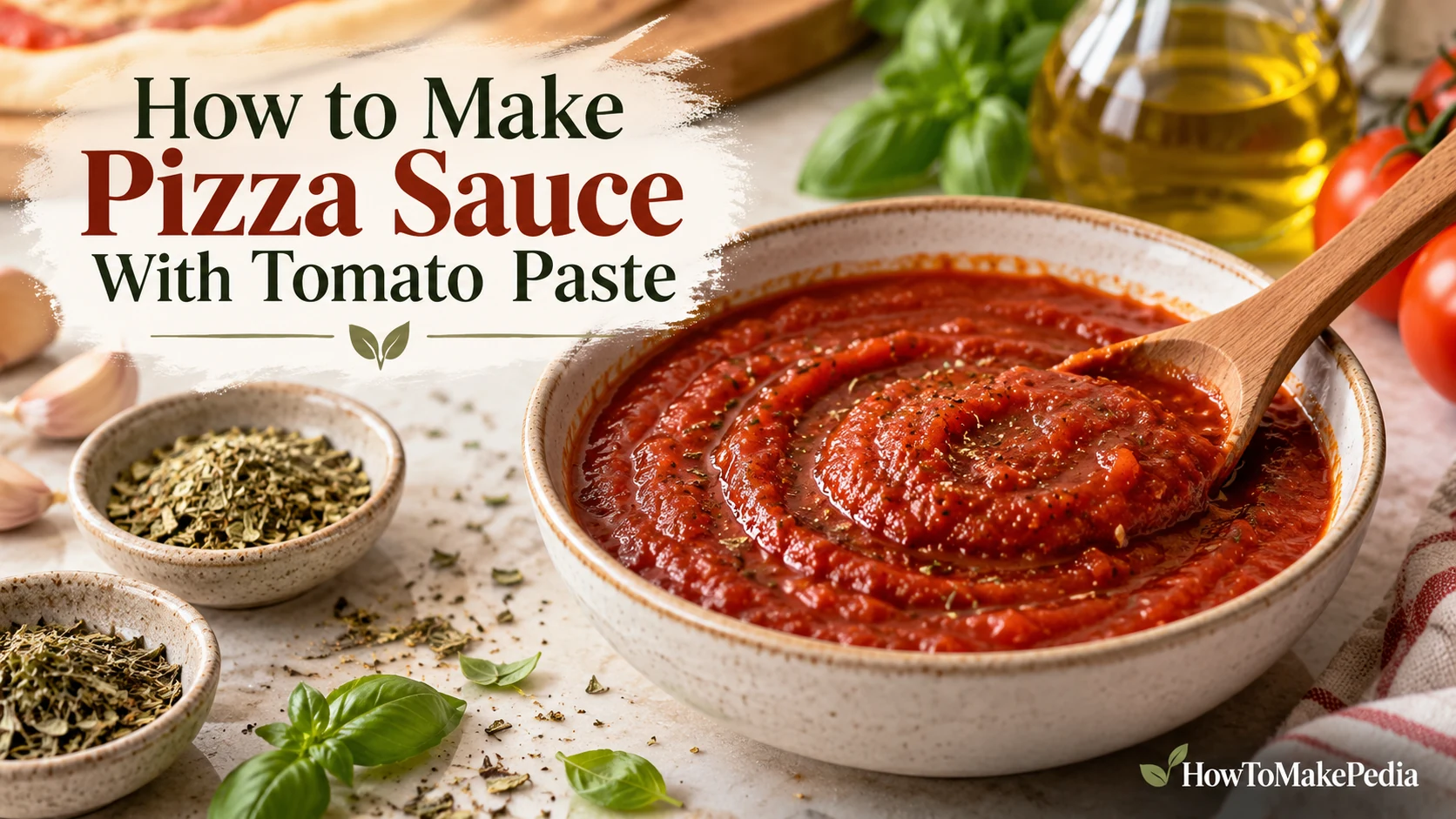

You can make pizza sauce with tomato paste in about five minutes using water, olive oil, and a few pantry seasonings. Simply thin the tomato paste until it’s easy to spread, stir in the herbs and garlic powder, and spoon it onto your pizza dough. There’s no need to cook the sauce first if you’re using it on a pizza that will be baked.
This homemade pizza sauce with tomato paste is especially handy when you’re out of prepared pizza sauce or don’t want to open a large can of crushed tomatoes. A standard 6-ounce can of tomato paste makes a convenient batch for a family pizza night.
Quick Answer: How Do You Turn Tomato Paste Into Pizza Sauce?
To turn tomato paste into pizza sauce, combine one 6-ounce can of regular tomato paste with ¼ cup water. Stir until smooth, then add olive oil, oregano, basil, garlic powder, salt, and pepper. Add more water, one tablespoon at a time, until the sauce spreads easily without running off the spoon.
You want a sauce that is thick enough to stay on the pizza but soft enough to spread without pulling at the dough.
Quick recipe details:
- Prep time: 5 minutes
- Cooking time: None for the sauce
- Total time: 5 minutes
- Method: No-cook
- Yield: About 1 cup of sauce, depending on added water (estimate)
- Pizza coverage: Approximately 3–4 lightly sauced 12-inch pizzas (estimate)
The pizza itself still needs to bake according to your dough recipe.
Ingredients You’ll Need
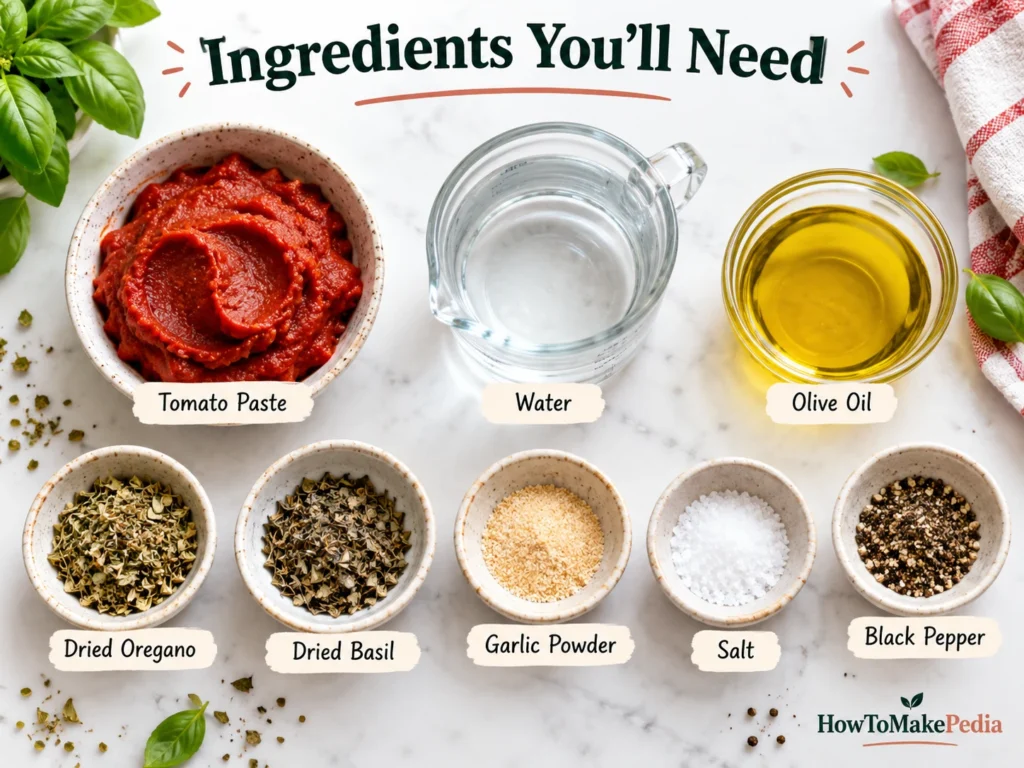
You don’t need fresh tomatoes or a blender to prepare this easy pizza sauce recipe.
Tomato Paste
Use one 6-ounce (170 g) can of regular tomato paste. Tomato paste provides the concentrated tomato flavor and body of the sauce.
Choose plain tomato paste so you can control the added herbs and salt. If your paste already contains seasoning, taste it before adding more.
Water
Start with ¼ cup (60 ml) water and have up to another ¼ cup (60 ml) available.
Water loosens the concentrated paste. The amount you’ll actually use depends on the brand and thickness of your tomato paste.
Olive Oil
Add 1 teaspoon (5 ml) olive oil for a little richness. You can leave it out if you prefer an oil-free sauce.
Dried Oregano
Use ½ teaspoon dried oregano for a familiar pizza-sauce flavor.
Dried Basil
Add ¼ teaspoon dried basil. Dried basil is convenient because it blends easily into the sauce and doesn’t require chopping.
Garlic Powder
Use ¼ teaspoon garlic powder for a mild garlic flavor that distributes evenly through the sauce.
Salt and Black Pepper
Start with ⅛ teaspoon fine salt and ⅛ teaspoon ground black pepper. Taste before adding more salt, especially if the tomato paste already contains sodium.
Optional Ingredients
You can add a pinch of crushed red pepper flakes for heat, a little onion powder for extra savory flavor, or a small pinch of sugar if the tomato flavor tastes unusually sharp.
None of these additions is necessary for the basic recipe.
Kitchen Equipment
You only need a small mixing bowl, measuring cups, measuring spoons, and a whisk or sturdy spoon.
A silicone spatula is useful for scraping thick tomato paste out of the can and spreading the finished sauce on pizza dough.
Tomato Paste to Water Ratio for Pizza Sauce
The right water ratio depends on how concentrated your tomato paste is and how thick you like your sauce.
For regular canned tomato paste, begin with approximately ¼ cup water for one 6-ounce can. Add more gradually if needed.
Double-concentrated and triple-concentrated pastes may need additional water to become spreadable. They shouldn’t automatically be diluted using the same fixed ratio as ordinary canned paste.
Regular Tomato Paste
Regular canned tomato paste is a good starting point for this recipe.
Begin with ¼ cup water. Whisk until the mixture is smooth, then check its thickness.
If the sauce is difficult to spread, add another tablespoon of water and mix again. Continue only until you reach the consistency you want.
Double-Concentrated Tomato Paste
Double-concentrated tomato paste is often sold in tubes. Because its concentration can differ from regular canned paste, start with a modest amount of water and increase it gradually.
For a batch using 6 ounces by weight, you might need more water than the regular-paste version. The sauce texture matters more than matching a precise ratio.
Triple-Concentrated Tomato Paste
Triple-concentrated paste can be particularly dense. Dilute it a little at a time and taste the sauce as you go.
Extra-concentrated pastes can also produce a stronger tomato flavor, so adjust the seasoning after adding the water.
What Should Pizza Sauce Look Like?
Good pizza sauce should resemble a thick, smooth spread rather than tomato juice.
When you lift a spoon, the sauce should cling to it and fall back slowly. It should spread across dough without forming watery puddles.
If you’re making a thin-crust pizza, keep the sauce toward the thicker end of that range.
How to Make Pizza Sauce With Tomato Paste
This no-cook pizza sauce takes just a few minutes and doesn’t require any special equipment.
Step 1: Measure the Tomato Paste
Open one 6-ounce can of regular tomato paste and transfer it to a small bowl.
Use a spatula to scrape out the remaining paste. It will look thick and may hold its shape in the bowl.
Step 2: Add Water Gradually
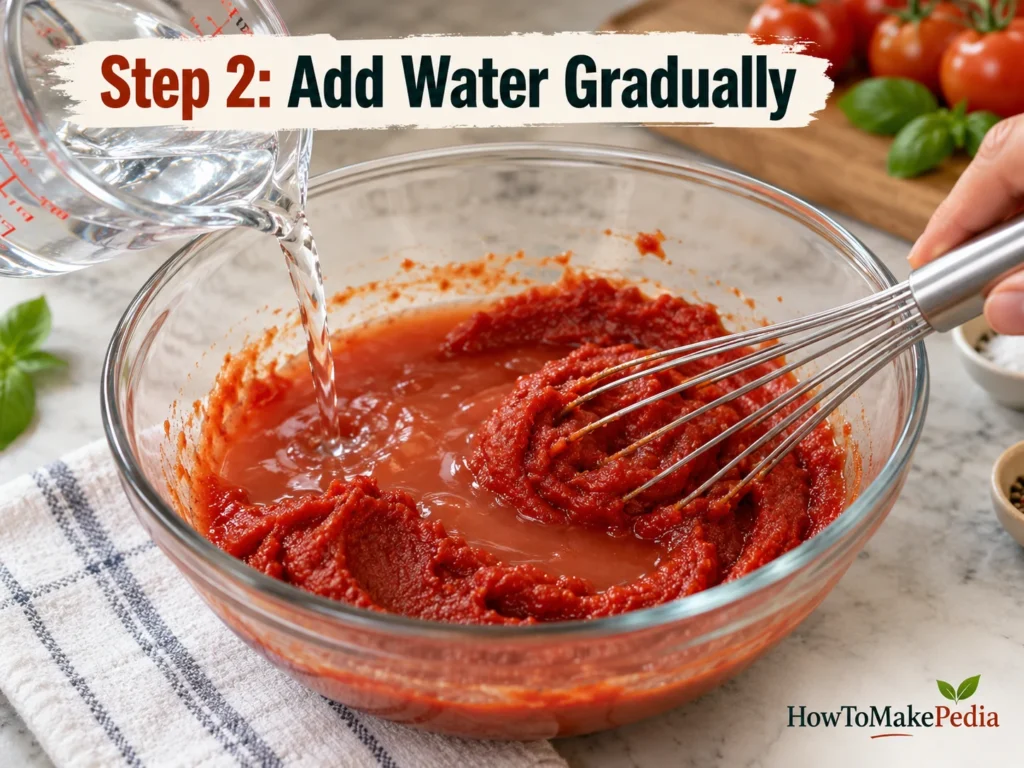
Pour in ¼ cup water and whisk until the tomato paste and water are evenly combined.
Scrape the sides and bottom of the bowl to break up any remaining clumps.
Check the consistency. If the sauce still feels too stiff, add another tablespoon of water. Repeat as needed, using no more than the additional ¼ cup as your initial guide.
Stop before the sauce becomes runny.
Step 3: Add Olive Oil and Herbs
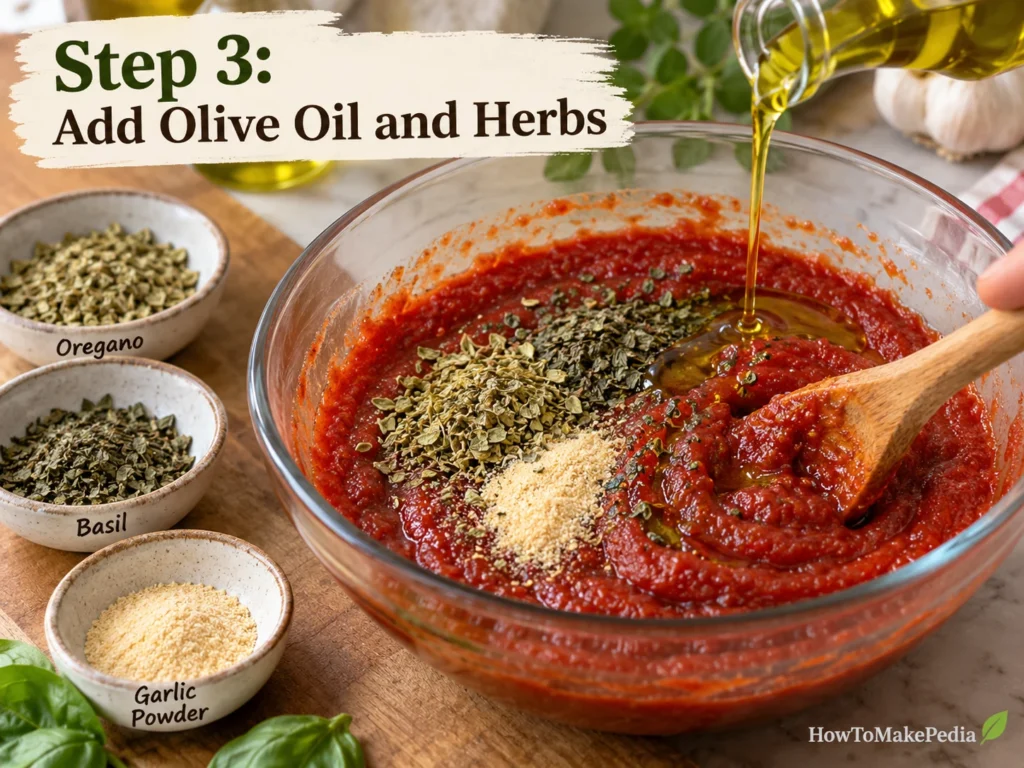
Stir in:
- 1 teaspoon olive oil
- ½ teaspoon dried oregano
- ¼ teaspoon dried basil
- ¼ teaspoon garlic powder
- ⅛ teaspoon fine salt
- ⅛ teaspoon black pepper
Mix until the oil and seasonings are evenly distributed throughout the sauce.
You should no longer see separate streaks of oil or dry pockets of herbs.
Step 4: Taste and Adjust
Taste a small amount of the sauce with a clean spoon.
If the tomato flavor is too concentrated, stir in a little more water. If it tastes flat, adjust the salt or herbs gradually.
Remember that cheese and other pizza toppings may already contain plenty of salt.
If the tomato paste tastes especially sharp, a very small pinch of sugar can soften the perceived acidity, although it doesn’t remove the acid.
Step 5: Spread the Sauce on Pizza Dough

Place your prepared pizza dough on the baking surface recommended by your dough recipe.
Spoon a modest amount of sauce onto the center and spread it outward in a thin, even layer.
Leave a narrow border around the edge for the crust. Add cheese and your preferred toppings, then bake according to the pizza dough recipe.
The sauce doesn’t need separate cooking before it goes into the oven.
Can You Make Pizza Sauce Without Cooking It?
Yes. A tomato-paste-based pizza sauce can be mixed and used without additional stovetop cooking.
Tomato paste has already been heated and concentrated during commercial processing. You don’t need to simmer it again just to make it spreadable.
The sauce will heat as the pizza bakes, along with the cheese and toppings.
This is different from serving raw pizza dough. Even though the sauce is ready to spread, the assembled pizza still needs to be baked properly.
No-Cook vs. Cooked Pizza Sauce
The no-cook method is useful when you want a quick sauce with concentrated tomato flavor and minimal cleanup.
A cooked variation may be useful if you’d prefer to soften the flavor of the seasonings or incorporate additional ingredients.
To make an optional cooked version, combine the prepared sauce in a small saucepan and warm it gently over low heat for approximately 3–5 minutes, stirring frequently.
If it thickens too much, add a splash of water. Tomato paste is already concentrated, so prolonged simmering usually isn’t necessary.
Allow the sauce to cool sufficiently before spreading it over delicate pizza dough.
This optional heating time is not part of the five-minute main recipe.
How Much Pizza Sauce Should You Use Per Pizza?

The ideal amount depends on the pizza’s diameter, the thickness of its crust, and how much sauce you prefer.
For a typical 12-inch pizza, begin with about ¼ cup sauce. You can increase it toward ⅓ cup if you prefer more tomato flavor and your crust can support it.
These are starting estimates rather than exact requirements.
For a very thin crust, use a lighter layer. A thicker, sturdier pizza crust may hold a little more.
The important thing is to spread the sauce evenly rather than piling it into the middle.
Tips for Better Homemade Pizza Sauce
Add Water Slowly
It’s easier to thin a thick sauce than to repair one that contains too much water.
Begin with the smaller amount, stir thoroughly, and only add more when necessary.
Don’t Oversauce the Dough
Too much sauce can contribute to a soft or soggy pizza center, especially when the toppings also release moisture.
A thin layer is usually a better starting point.
Use Garlic Powder for Convenience
Garlic powder is easy to measure and blends into the sauce without chopping.
Fresh garlic can also work, but it will create a different texture and a sharper flavor in an uncooked mixture.
Adjust the Seasoning to Your Toppings
A strongly seasoned pepperoni pizza may need less salt in its sauce than a simple cheese pizza.
Taste the sauce before adding extra seasoning.
Use a Thicker Sauce for Thin Crust
Thin dough has less structure to support heavy toppings and excess liquid. Keep the sauce thick and spread it sparingly.
Watch Moisture From Toppings
Wet mushrooms, fresh tomatoes, and certain cheeses can release liquid while baking.
Drain or prepare high-moisture toppings appropriately rather than relying on the sauce alone to prevent a soggy pizza.
Easy Pizza Sauce Variations
These are optional modifications to the basic formulation, not separately kitchen-tested recipes.
Garlic and herb: Add a little extra garlic powder, oregano, or basil. Start with small amounts so the herbs don’t overpower the tomatoes.
Spicy: Stir in a pinch of crushed red pepper flakes. Increase gradually according to your preferred heat level.
Italian seasoning: Replace the separate oregano and basil with approximately ½ teaspoon dried Italian seasoning to start. Seasoning blends vary, so taste before adding more.
Without olive oil: Leave out the oil and adjust the water until the sauce is spreadable. The flavor may be slightly less rich.
Fresh basil: Stir in a little finely chopped fresh basil shortly before using the sauce. Fresh basil produces a different flavor from dried basil.
Extra thick: Use less water, provided the sauce can still be spread across the dough without tearing it.
Two-ingredient sauce: Mix tomato paste and water until smooth. This makes a plain tomato base, although you’ll probably want seasoning for a more flavorful pizza.
How to Store Homemade Pizza Sauce
Transfer unused sauce to a clean, airtight container and refrigerate it promptly.
As a conservative precaution, plan to use refrigerated sauce within 3–4 days and keep your refrigerator at 40°F (4°C) or colder.
This time frame is based on general food-storage guidance and is not a laboratory-validated shelf-life determination for this exact no-cook formulation.
For longer storage, divide the sauce into smaller portions and freeze in suitable airtight containers or freezer bags.
For best quality, aim to use frozen portions within approximately 2–3 months. Thaw in the refrigerator and stir before using.
Don’t leave prepared sauce at room temperature for extended periods, and discard it if its storage history is uncertain.
This recipe is not intended for home canning or shelf-stable storage.
Pizza Sauce vs. Pasta Sauce: What’s the Difference?
Pizza sauce and pasta sauce often contain similar ingredients, but they’re prepared for different uses.
This pizza sauce is thick, easy to spread, and designed to cook further on a pizza in the oven.
Pasta sauce may be thinner, more heavily seasoned, or simmered with additional ingredients before serving over noodles.
If you want to convert tomato paste into a general-purpose sauce for pasta, a separate tomato sauce recipe may be more appropriate.
Final Thoughts
Making pizza sauce from tomato paste is a practical way to use ingredients already in your pantry. Start with a small amount of water, mix in your preferred seasonings, and adjust until the sauce spreads easily.
Once you’ve found the thickness you like, you can use the same basic method for homemade pizza, flatbread pizza, or other baked dishes that call for a simple tomato topping.
